
Master of Data Science
The Master of Data Science will equip you with a comprehensive suite of skills needed to manage, manipulate, analyse and visualise data, across a wide range of sectors including science, business, IT, health care and government. Your studies will include a deep dive into areas such as artificial intelligent and machine learning, data analytics for cyber threat intelligence, experiment design and visualisation, programming and more.
As a graduate, you will meet the AQF level 9 requirements, putting you in high demand. This includes high-level roles in data science, data engineering, business analytics, statistics or data warehouse operation.
The course is fully accredited by the Australian Computing Society (ACS) and the Statistical Society of Australia (SSA).

Course essentials
Entry requirements
Credit
A full-time study load is 120 credits a year (usually four 15-credit units each semester). 120 credits equal one equivalent full-time student load (EFTSL). Each credit point equals about 10 hours of learning, so a 15-credit unit means roughly 150 hours.
Study mode
Study modes tell you how teaching and learning will be delivered for your course and include where and when classes can be scheduled, what you'll do and the tech you'll use.
Online
Duration
Start dates
26 July 2027
Locations
Online
Course overview
This course provides an opportunity for you to develop an advanced understanding of data science by incorporating and interpreting complex information, concepts and theories to relevant disciplines, using data science tools and methods to manage, process, and analyse data.
Throughout the course, you will utilise your skills to handle large volumes of data, working with real-time data, cloud computing, unstructured data and statistical models. As a graduate, you may work in data science related areas such as the health care, finance, government administration and IT industries.
Consisting of 14 units of study, the Master of Data Science is taught in English and normally takes two years of full-time study or part-time equivalent to complete. Your admission will be based on having completed a previous bachelors level qualification at AQF 7 or equivalent.
The course structure includes 11 core units and three elective units. You will be required to complete two 30 credit point project units (60 credit point project in total) which can be used to undertake either an applied industry based project, or complete a research oriented thesis.
This course is also available as a graduate certificate and graduate diploma option for domestic and international students.
IT requirements
To do this course you’ll need a fast and reliable computer and access to high-speed internet. Expect to use about 5GB of data per month for every unit you’re doing. Find out more about the minimum IT requirements for studying with us.
Got questions?
Call us on 1800 333 864, start a live chat or submit an enquiry.
Student support
The support we offer is second to none. Need academic help? No problem. Extra access or financial assistance? Let’s see what we can do. View our student services.
The fine print
The commencement of all courses is subject to available funding and enrolment quotas.
Everything in this course overview is correct at the time of being published. However, the University reserves the right to alter any course, procedure or fee. Please check for changes before you apply or enrol.
Federation University uses Victorian and Commonwealth Government funding (for eligible students) to deliver training.
School department
Engineering
Course co-ordinator
Savin Chand

Career paths

Professional recognition
This course holds Professional Level accreditation with the Australian Computer Society (ACS) and the Statistical Society of Australia (SSA).
Fees and scholarships
Tuition fee information
Commonwealth Supported Places are subsidised by the Australian Government. The tuition fee is called the student contribution amount. The indicative fee above is based on a typical first-year enrolment for this course and should be used as a guide only. For 0.5 EFTSL (60 credit point) courses the certificate fee is displayed. Your fee will depend on the units you chose, your study load, the time it takes to complete your course and any approved credit you receive.
How it's calculated
The government sets the fee each year. The amount depends on the discipline area and band of each unit. 2026 annual student contribution amounts for 1 EFTSL (equivalent full-time student load) range from $4,738 (Band 1) to $17,399 (Band 4). The sample course structure below link to the EFTSL, Band and fee for each unit or you can use our unit search to find these details.
Other fees
You will also need to pay the Student Services and Amenities Fee (SSAF).
Fee assistance
If you're eligible for a HECS-HELP loan, you can defer the payment of all or part of your student contribution fee. If you’re also eligible for a SA-HELP loan, you can defer your SSAF payment too. You won’t have to start paying either loan back until your income reaches the compulsory repayment threshold.
Scholarships
There’s a range of scholarships and grants available. Find out what you can apply for.
Course details
Start dates
Semester 1, 2027
1 March 2027
Locations
Mt Helen (on campus)
Online
Semester 2, 2027
26 July 2027
Locations
Mt Helen (on campus)
Online
Information
- Our Mt Helen, SMB, Camp St and Gillies St campuses are located in Ballarat.
- Online learning is only an option if you’re not studying on an international student visa.
Contact hours
You’d be looking at about 25-30 hours per week (if you’re full time), but this includes on-campus classes and self-directed study (i.e. homework).
Work integrated learning
Includes the following work component hours for Co-op are 37.5 hours per week x 6 weeks = 225 hours
Sample course structure
Here’s what the course structure could look like. It’s just an example (so don’t use it for enrolment). Interested in the details? You can find current course structure or select a single unit name below to find out what it’s about and how much it costs.
- The Data-Driven Professional15 credit pointsITECH5207
- Foundations of Programming (Masters)15 credit pointsITECH5104
- Mathematics for Data Science15 credit pointsMATHS5000
- Introduction To Cyber Security Fundamentals and Practices15 credit pointsITECH7611
- Professional Research and Communication15 credit pointsITECH5500
- Leadership in IT Project Management15 credit pointsITECH7401
- Statistics and R15 credit pointsSTATS5000
Prescribed Elective
- Co-Operative Placement (Information Technology)30 credit pointsCOOPI9011
- Masters Project 115 credit pointsITECH7416
- Artificial Intelligence and Machine Learning15 credit pointsITECH7001
- Masters Project 215 credit pointsITECH7417
- Experiment Design and Visualisation15 credit pointsDATSC7003
- Regression and Multivariate Data Analysis15 credit pointsSTATS7101
Prescribed Elective
Entry requirements
Entry requirements (non year 12)
Admission criteria for applicants with a Higher Education Study
This course uses the applicants’ entire academic record as part of its selection considerations.
Compulsory: Successful completion of and undergraduate degree at AQF level 7 in an area of science, mathematics, statistics, engineering, information technology or business.
Applicants will be required to demonstrate previous studies in introductory mathematics and at least once information technology course in their undergraduate degree. If this cannot be demonstrated, an approved elective course must be selected in the first semester of study to meet the prerequisite requirements.
English language requirements
Overall IELTS band score of 6.0, with no band less than 6.0 or equivalent.
If you’re only applying for this course, do it via direct application.
Ready to fill out your application?
You'll need this code:
Direct application
Federation University code
- Direct application
- Yes
- Federation University code
- CX9
This is an applied postgraduate course and does not directly lead to further coursework study.
However, by virtue of the 60 credit point project and research methods course, students may complete a research thesis and use this as a pathway to a higher degree by research.
Hear from our staff
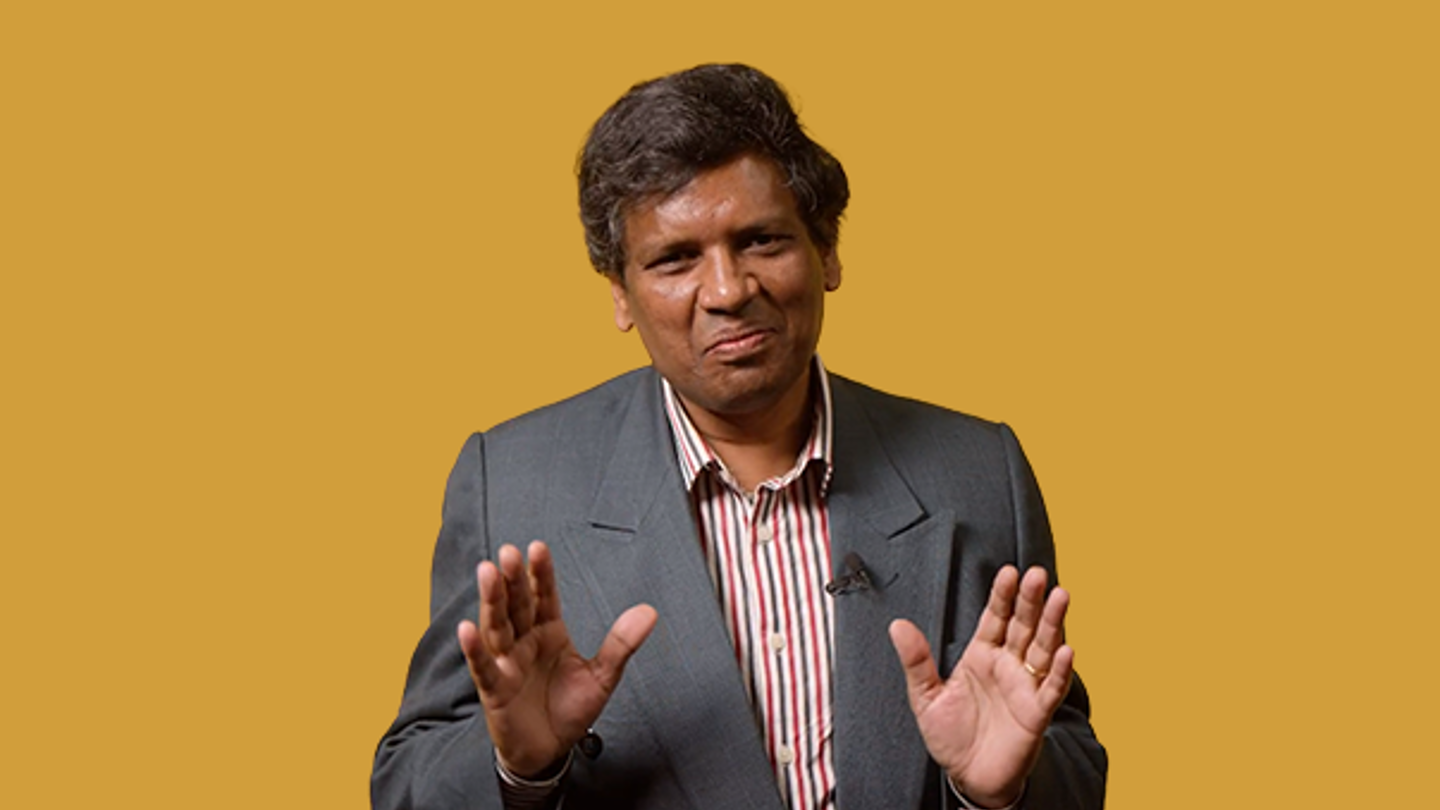

Hi, my name is Dr Gour Karmakar and I am the Associate Professor in Information Technology and Program Coordinator of Bachelor of IT Gippsland and Networking and Security stream at Federation University. My favourite part of this program is that it comprises contemporary and in-demand courses and streams such as Business Information Systems, Big Data, Analytics, Networking and Security and Software Development. They enable students to get highly paid jobs such as data scientist, cyber security and networking specialist, software engineer and business analyst. The program not only focuses the development of theoretical knowledge but also underpins on hands-on experience and contemporary tools. Using contemporary tools they equip students with sufficient knowledge and technical foundational skill to apply in different business context. What makes our program different from other universities is that we are collaborating with industry to embed co-op education, that is co-design, co-delivery and co-assessment of the courses. Besides, authentic assessment is the bedrock of this program. The coordination of co-operation is also mapping the courses to relevant vendor certification which help students become job ready and secure great job. Fun fact, that I occasionally write poetry and like walking in the morning. So please study this course and join Federation University.