
Master of Health (Workplace Health and Safety)
Advance your workplace health and safety leadership skills, using evidence based practice, with a Master of Health (Workplace Health and Safety) from the Victorian Institute of Occupational Safety and Health (VIOSH).

Course essentials
Entry requirements
Credit
A full-time study load is 120 credits a year (usually four 15-credit units each semester). 120 credits equal one equivalent full-time student load (EFTSL). Each credit point equals about 10 hours of learning, so a 15-credit unit means roughly 150 hours.
Study mode
Study modes tell you how teaching and learning will be delivered for your course and include where and when classes can be scheduled, what you'll do and the tech you'll use.
Duration
Start dates
26 July 2027
Locations
Course overview
Course is "Part -time" only over 48 months.
This course aims to assist Workplace Health and Safety (WHS) professionals further develop implement and evaluate WHS interventions by utilising strong evidence based practice. Coursework from the Graduate Diploma of Health (Workplace Health and Safety) is delivered throughout first year whilst second year focuses on further developing your research skills. Throughout the completion of your research project you will work closely with an academic supervisor to critically evaluate a WHS intervention within the context of a workplace. The flexibility of this course will allow you to continue working whilst adequately interacting with your supervisory team. This course is only offered part-time (duration is 4 years). It is also available as a graduate certificate and graduate diploma option. Please note on campus blocks are compulsory for some subjects within this course. Please view individual subjects within the sample structure tab (below) for further information.
IT requirements
To do this course you’ll need a fast and reliable computer and access to high-speed internet. Expect to use about 5GB of data per month for every unit you’re doing. Find out more about the minimum IT requirements for studying with us.
Got questions?
Call us on 1800 333 864, start a live chat or submit an enquiry.
Student support
The support we offer is second to none. Need academic help? No problem. Extra access or financial assistance? Let’s see what we can do. View our student services.
The fine print
The commencement of all courses is subject to available funding and enrolment quotas.
Everything in this course overview is correct at the time of being published. However, the University reserves the right to alter any course, procedure or fee. Please check for changes before you apply or enrol.
Federation University uses Victorian and Commonwealth Government funding (for eligible students) to deliver training.
School department
Nursing
Course co-ordinator
Michael Barbagallo

Career paths

Professional recognition
Enables the student to become accredited with the Safety Institute of Australia as an accredited OH&S professional. This course is accredited by the Safety Institute of Australia (SIA). Graduands of this course are deemed to have met the OHS qualification content requirement for certification, at either OHS professional or Chartered OHS professional levels.
Fees and scholarships
Tuition fee information
Commonwealth Supported Places are subsidised by the Australian Government. The tuition fee is called the student contribution amount. The indicative fee above is based on a typical first-year enrolment for this course and should be used as a guide only. For 0.5 EFTSL (60 credit point) courses the certificate fee is displayed. Your fee will depend on the units you chose, your study load, the time it takes to complete your course and any approved credit you receive.
How it's calculated
The government sets the fee each year. The amount depends on the discipline area and band of each unit. 2026 annual student contribution amounts for 1 EFTSL (equivalent full-time student load) range from $4,738 (Band 1) to $17,399 (Band 4). The sample structure section above links to the EFTSL, Band and fee for each unit or you can use our unit search to find these details.
Other fees
You will also need to pay the Student Services and Amenities Fee (SSAF).
Scholarships
There’s a range of scholarships and grants available. Find out what you can apply for.
Course details
Start dates
Semester 1, 2027
1 March 2027
Locations
Online
Semester 2, 2027
26 July 2027
Locations
Online
Information
- Online learning is only an option if you’re not studying on an international student visa.
Contact hours
A supervisory team will be appointed to provide support for candidates undertaking the thesis component of the Masters course. The frequency of supervisory meetings and the mode of those meeting and face-face, video conferencing, email and will be negotiated at the beginning of a students candidature.
Sample course structure
Here’s what the course structure could look like. It’s just an example (so don’t use it for enrolment). Interested in the details? You can find current course structure or select a single unit name below to find out what it’s about and how much it costs.
- Contemporary Workplace Health and Safety Practice and Risk30 credit pointsHLWHS6000
- Workplace Health and Safety Regulation, Systems and Complexity30 credit pointsHLWHS6001
- Workplace Health and Safety and Organisational Effectiveness30 credit pointsHLWHS6002
- Work Integrated Project30 credit pointsHEALT7006
- Research Methods for Health30 credit pointsHEALT6001
- Inquiry and Analysis of Literature30 credit pointsHEALT6002
- Research Thesis A30 credit pointsHEALT7002
- Research Thesis B30 credit pointsHEALT7003
Entry requirements
Entry requirements (non year 12)
Completion of a Graduate Certificate or Graduate Diploma (Workplace Health and Safety) from Federation University (or equivalent); OR other university qualifications and appropriate industrial experience and demonstrated academic standard to meet the requirements.
Extra requirements
Applicants must supply a current resume with their application.
If you’re only applying for this course, do it via direct application.
Ready to fill out your application?
You'll need this code:
Direct application
Federation University code
- Direct application
- Yes
- Federation University code
- HN9
- Students who have successfully completed HN4.WH may be eligible to apply for entry into the course with 60 Credit Points for units HLWHS6000 and HLWHS6001.
- Students who have successfully completed HM4.WH may be eligible to apply for entry into the course with 120 Credit Points for units HLWHS6000, HLWHS6001, HLWHS6002 and HEALT7006.
Hear from our staff
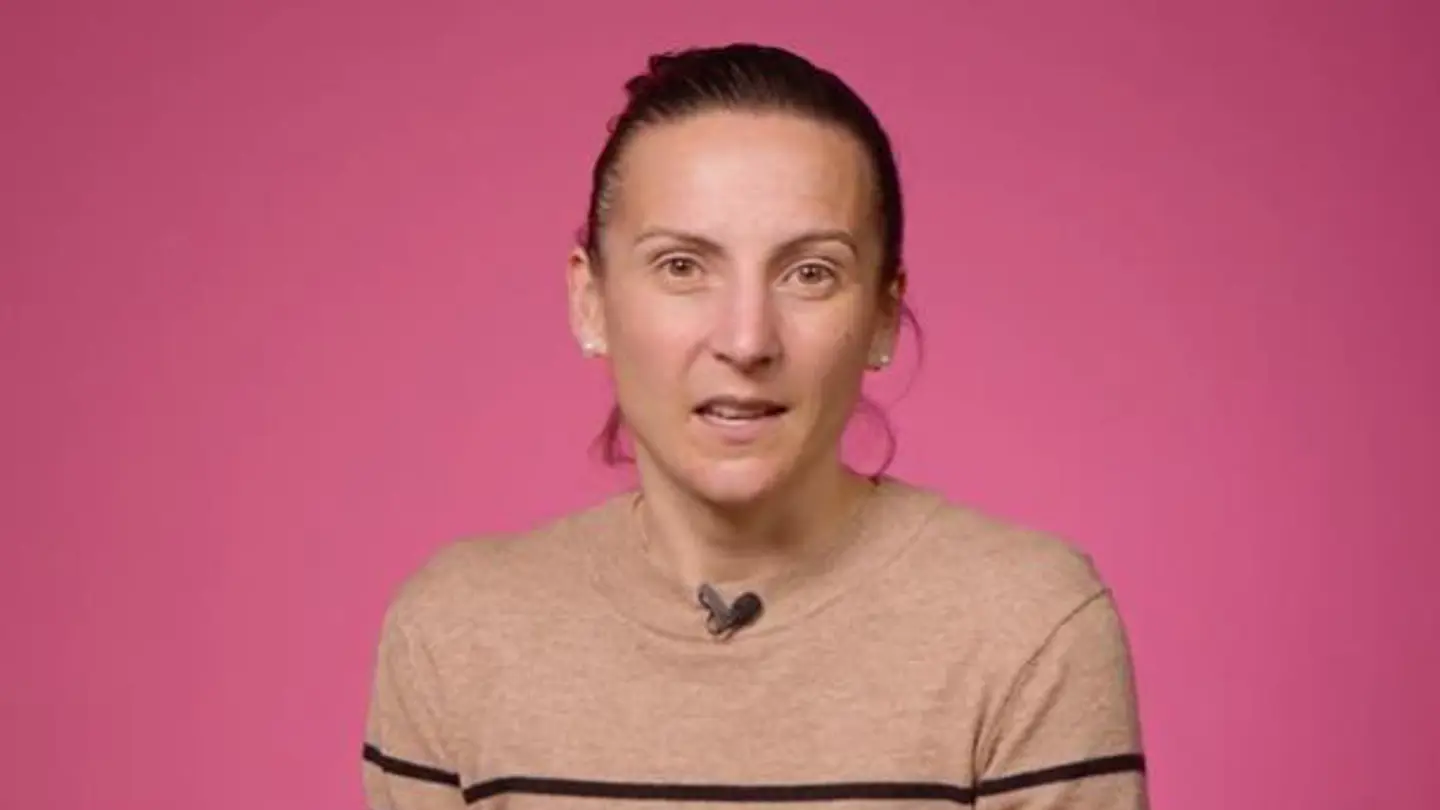

Hello, my name is Dr Anne Baker and I'm a lecturer in Occupational Therapy at Federation Uni on the Gippsland campus in Churchill. One thing I really love about teaching here is that we have small class sizes so that I get to really know my students and it means I can work with them to work on their personal learning goals and to help support them to become occupational therapists. An interesting thing about studying here is that we have brand new facilities that were developed in 2020 when the program first started, and we have a great teaching space which includes up-to-date equipment and assessment. So students are really getting the most relevant skills. And as they work to become occupational therapists, we also have excellent relationships with our clinical partners. So students get a great range of placement experiences and develop their skills in a range of different areas. A fun fact about me is that I'm also an occupational therapy driver assessor, which means that I can assess, make recommendations about people's fitness to drive. This is typically not an area that people think about when they think about occupational therapy, but occupation is more than just your job, so it includes things like self-care, so things like sharing and dressing, productive occupations, which does include work, and also things like driving, as well as leisure occupations, which are things that people do to occupy their time and their space. So this means as occupational therapists, we work from early on in people's lives, so pretty soon after birth, all the way through to advanced age and conditions that involve dying. We'd love you to come and study occupational therapy with us. We have a really great teaching team here, fantastic resources and I think you'll enjoy the student experience.