
Bachelor of Speech Pathology (Honours)
Play a crucial role in assessing and treating communication and swallowing difficulties.
Limited availability
Places in this course are limited and entry is competitive. Apply early for the best chance of securing your place.

Course essentials
ATAR
If you receive an ATAR equal to or above the guaranteed ATAR, and meet the course prerequisites and any extra requirements, you're guaranteed a place.
A lowest adjusted ATAR shows the lowest selection rank (ATAR plus adjustments) offered a place last year. It's not a guaranteed entry score and changes annually.
This course uses the ATAR as part of its selection considerations.
Entry requirements
Credit
A full-time study load is 120 credits a year (usually four 15-credit units each semester). 120 credits equal one equivalent full-time student load (EFTSL). Each credit point equals about 10 hours of learning, so a 15-credit unit means roughly 150 hours.
Study mode
Study modes tell you how teaching and learning will be delivered for your course and include where and when classes can be scheduled, what you'll do and the tech you'll use.
On campus
Duration
Start dates
Locations
Berwick (on campus)
Gippsland (flexible)
Gippsland (on campus)
Mt Helen (on campus)
Course overview
Speech pathologists' study, diagnose, and treat communication and swallowing disorders, including difficulties with speech, language, fluency, and voice. You will work with people who have difficulty communicating because of developmental delays, stroke, brain injuries, learning disability, intellectual disability, cerebral palsy, dementia, and hearing loss, as well as other difficulties that can affect speech and language. People who experience difficulties swallowing food and drink safely can also be helped by a speech pathologist.
Throughout the degree, you will develop knowledge and core practical skills in anatomy and neurophysiology behind communication and swallowing impairments, science of speech and hearing, linguistics, language, and healthcare. You will also learn how to identify and implement appropriate therapeutic treatments and management options. You will study foundation subjects in year 1 and 2, and specialise in one of two streams in year 3 and 4: Professional and Research. Both streams enable you to work as a Speech Pathologist in Australia.
The Professional stream offers an honours project, allowing you to pursue speech pathology interests in health or education disciplines.
The Research stream also offers a research project in health or education disciplines; however, eligibility for entry requires a high grade pass average (GPA).
The clinical practice placement throughout the course will provide valuable and relevant workplace experience. Our on campus and blended learning approach, through face-to-face delivery and flexible delivery in Ballarat and Gippsland, offer tutorials, online engagement activities, and practical learning supported by our facilities in Gippsland and our new Health and Sports Precinct in Ballarat.
As a Speech Pathologist, you may work as a clinician educator, researcher, policy advisor, manager, advocate, or consultant in a variety of industries, including government and non-government organisations, education, health, welfare, policy development, community-based organisations, and private practice.
Please note, our speech pathology courses have been designed to meet the accreditation standards of Speech Pathology Australia, and is currently in the qualifying phase of accreditation. Federation University will seek accreditation of the award courses prior to the first cohort of students graduating. To view accreditation progress please visit the Speech Pathology Australia website.
Current Year 12 students whose primary residence is in a regional or remote area may be eligible to apply for this course through the Regional and Remote Entry Scheme. Eligible students can apply using the reduced Guaranteed ATAR and specific VTAC codes.
IT requirements
To do this course you’ll need a fast and reliable computer and access to high-speed internet. Expect to use about 5GB of data per month for every unit you’re doing. Find out more about the minimum IT requirements for studying with us.
Got questions?
Call us on 1800 333 864, start a live chat or submit an enquiry.
Student support
The support we offer is second to none. Need academic help? No problem. Extra access or financial assistance? Let’s see what we can do. View our student services.
The fine print
The commencement of all courses is subject to available funding and enrolment quotas.
Everything in this course overview is correct at the time of being published. However, the University reserves the right to alter any course, procedure or fee. Please check for changes before you apply or enrol.
Federation University uses Victorian and Commonwealth Government funding (for eligible students) to deliver training.
School department
Speech Pathology
Course co-ordinator
Kate Fanning

Career paths

Professional recognition
Fees and scholarships
Tuition fee information
Commonwealth Supported Places are subsidised by the Australian Government. The tuition fee is called the student contribution amount. The indicative fee above is based on a typical first-year enrolment for this course and should be used as a guide only. For 0.5 EFTSL (60 credit point) courses the certificate fee is displayed. Your fee will depend on the units you chose, your study load, the time it takes to complete your course and any approved credit you receive.
How it's calculated
The government sets the fee each year. The amount depends on the discipline area and band of each unit. 2026 annual student contribution amounts for 1 EFTSL (equivalent full-time student load) range from $4,738 (Band 1) to $17,399 (Band 4). The sample course structure below link to the EFTSL, Band and fee for each unit or you can use our unit search to find these details.
Other fees
You will also need to pay the Student Services and Amenities Fee (SSAF).
Fee assistance
If you're eligible for a HECS-HELP loan, you can defer the payment of all or part of your student contribution fee. If you’re also eligible for a SA-HELP loan, you can defer your SSAF payment too. You won’t have to start paying either loan back until your income reaches the compulsory repayment threshold.
Scholarships
There’s a range of scholarships and grants available. Find out what you can apply for.
Course details
Start dates
Semester 1, 2027
1 March 2027
Locations
Ballarat (flexible)
Berwick (on campus)
Gippsland (flexible)
Gippsland (on campus)
Mt Helen (on campus)
Information
- Our Mt Helen, SMB, Camp St and Gillies St campuses are located in Ballarat.
- Flexible delivery means you'll be doing some of your classes online and some, like labs, on campus.
Contact hours
Domestic students can choose to study part-time during their first and second year of study, with years three and four being undertaken full-time. Find the details of our part-time pathway here.
Domestic students can also choose to study either on campus face-to-face or via flexible learning on the Gippsland and Mt Helen campuses. Berwick enrolment is on campus only. On campus students will complete most tutorial classes in the classroom on your home campus. This learning is complemented by online learning and compulsory intensive day/s usually before the practice education units. Flexible learning means your classes are mostly online with compulsory intensive on campus learning days 1-2 times a semester and are compulsory to attend.
Work integrated learning
This course includes prescribed professional practice placements to ensure students meet entry level to the profession. Students may be required to undertake such placements away from the Gippsland or Ballarat campuses, at their own expense.
(Note: health professional programs generally involve extensive professional or clinical placements).
Sample course structure
Here’s what the course structure could look like. It’s just an example (so don’t use it for enrolment). Interested in the details? You can find current course structure or select a single unit name below to find out what it’s about and how much it costs.
- Language Acquisition15 credit pointsEDBSP1013
- Anatomy and Physiology for Speech Pathology 115 credit pointsHEASP1011
- Introduction to Speech Pathology15 credit pointsHEASP1012
- Acquired Language and Speech Impairment 115 credit pointsHEASP1015
- Phonetics, Phonology and Oral Communication15 credit pointsEDBSP1023
- Anatomy and Physiology for Speech Pathology 215 credit pointsHEASP1021
- Lifespan Development and Communication15 credit pointsHEASP1022
- Health and Healthcare in Australia15 credit pointsNHPHS1401
- Applied Psycholinguistics15 credit pointsEDBSP2014
- Speech Pathology Development and Impairment15 credit pointsHEASP2012
- Speech Pathology Clinical Practice 115 credit pointsHEASP2013
- Health Professional Research 115 credit pointsNHPHS2101
- Language Development and Impairment15 credit pointsEDBSP2026
- Case Studies in Speech Pathology15 credit pointsHEASP2022
- Speech Pathology Clinical Practice 215 credit pointsHEASP2023
- Health Professional Research 215 credit pointsNHPHS2102
- Swallowing Disabilities Across the Life Span15 credit pointsHEASP3022
- Speech Pathology Clinical Practice 315 credit pointsHEASP3033
- Advanced Communication Skills for Health Professionals15 credit pointsNHPHS3015
Honours Project
- Healthcare in Rural and Regional Australia15 credit pointsHEASP3021
- Complex Case Studies in Speech Pathology15 credit pointsHEASP3024
- Speech Pathology Clinical Practice 415 credit pointsHEASP3043
- Acquired Language and Speech Impairment 215 credit pointsHEASP3025
- Advanced Clinical Reasoning15 credit pointsHEASP4021
- Speech Pathology Clinical Practice 530 credit pointsHEASP4053
Honours Project
- Speech Pathology Clinical Practice 630 credit pointsHEASP4063
Honours Project

It's an Open Day out!
Choosing a uni is a big deal. But like your favourite Netflix binge, it's better when shared. Bring the whole crew for an Open Day out and discover the University that's with you every step of the way.
3x $1000 giveaways up for grabs! All you have to do is register for one of our Open Days out!
Entry requirements
Entry requirements (year 12)
Pre-requisites
Units 3 and 4, a study score of at least 30 in English. Units 1 - 4: a study score of at least 25 in one of Chemistry, Physics, Biology, any Maths, Health Education or Physical Education.
The course uses the ATAR as part of its selection considerations.
Guaranteed ATAR
This course has a guaranteed ATAR.
If you meet the course pre-requisites and any 'Essential Requirements for Admission', we will guarantee you a place in this course with this ATAR. We use the adjusted ATAR, factoring in subject adjustments and SEAS as detailed below.
Subject Adjustments
A study score of 35 in Biology, Chemistry or Physics equals 3 aggregate pointes per study. Overall maximum of 5 units.
SEAS (Special Entry Access Scheme)
Applicants who have experienced educational disadvantage are encouraged to apply for the Special Entry Access Scheme (SEAS). Depending on eligibility and your circumstances, a SEAS application may provide support for your course application. For further information go to Federation University Australia SEAS information and the Federation University Australia website.
Entry requirements (non year 12)
Applicants with Higher Education Study:
Successful completion of a any AQF level 7 bachelor's degree with GPA 5.0 and above
OR
Completion of at least 8 units in any AQF level 7 bachelor’s degree with a GPA 6.0 and above. Cognate degree (Bachelor of Nursing, Bachelor of Education (any), Bachelor of Occupational Therapy, Bachelor of Physiotherapy, Bachelor of Speech Pathology) will be given preference.
Applicants with VET study:
Successful completion of a cognate Diploma (Nursing, Education) and:
At least one year of full-time work experience in relevant field;
Meets the VCE English and Maths and/ or Science requirement or equivalent.
Entry into this course is competitive with only a limited number of places available at each campus. The volume of applications received exceed the number of places available and therefore meeting the minimum entry requirements does not guarantee an offer. Federation students who complete the first year of the Bachelor of Physiotherapy, Bachelor of Occupational Therapy, Bachelor of Education, or the Bachelor of Nursing may be given preference. All applicants will be ranked on the basis of past academic performance and relevant work experience.
English language requirements
Overall Academic IELTS band score of 8, with no band less than 8, or equivalent.
Extra requirements
Essential requirements for enrolment or graduation:
Immunisation
Compulsory: Prior to commencing clinical placements students are expected to provide evidence of current immunisation status. Full up-to-date immunisations are required. Required vaccinations are as per: Vaccination for Healthcare Workers Vic Dpt Health
Working with children check.
Compulsory: Applicants will be required to hold a valid Working with Children (WWC) Check prior to undertaking professional placements as part of this course.
For more information click here
Police record check
Compulsory: Applicants will be required to hold a valid National Police Record Check for professional placements as part of this course.
For more information click here
Immunisations
Compulsory: Prior to commencing clinical placements students are expected to provide evidence of current immunisation status.
NDIS Work Screening Test:
Compulsory: Applications will be required to undertake a NDIS Work Screening Check prior to undertaking professional placements as part of this course.
Mask Fit Testing:
Compulsory in some settings: Applicants will be required to complete mask fit testing prior to undertaking professional placements in some settings
Other: A study score of at least 25 in one of the following: Maths (any from units 1 -4), Chemistry, Physics, Biology, Health education or Physical Education.
How you apply will depend on your current situation – school leaver, tertiary background or life experience – and whether you’re also applying for courses at other institutions. Visit our how to apply page to find out more.
Ready to fill out your application? You might need these codes:
- VTAC application
- Yes
- VTAC code
- 3702411491, 3702412171 - Ballarat (flexible)
3701811491 - Berwick (on campus)
3702511491, 3702512171 - Gippsland (flexible)
3700711491, 3700712171 - Gippsland (on campus)
3700511491, 3700512171 - Mt Helen (on campus) - Direct application
- Yes
- Federation University code
- ST8
Applicants who complete the first year of either of the following Federation University degrees will be eligible for consideration:
- Bachelor of Physiotherapy
- Bachelor of Occupational Therapy
- Bachelor of Education
- Bachelor of Nursing
Credit may be considered if you have already successfully completed higher education studies in a relevant area.
Successful completion of a tertiary preparatory program such as the Federation University Foundation Access Studies Program does not meet the entry requirements for this course
Hear from our staff
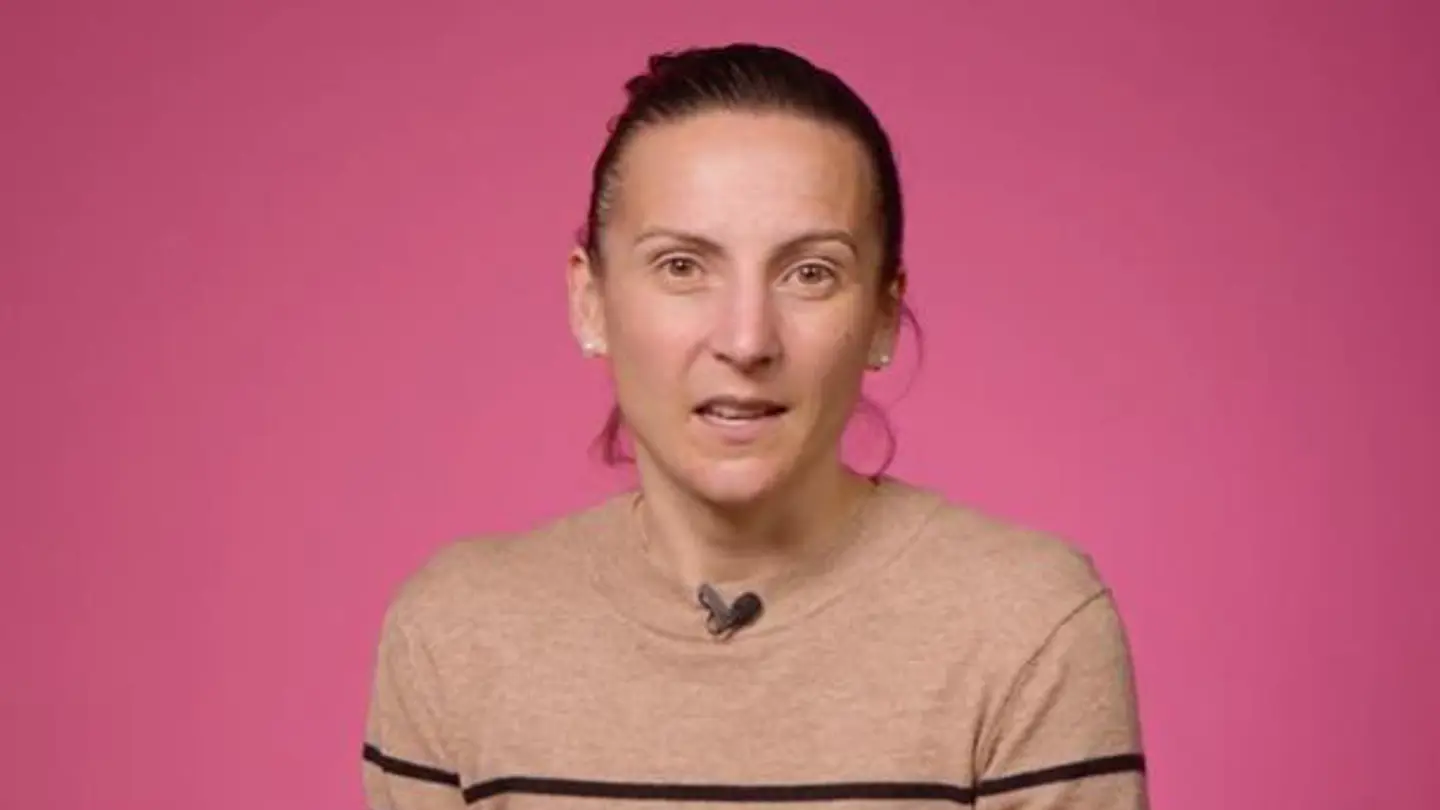

Hello, my name is Dr Anne Baker and I'm a lecturer in Occupational Therapy at Federation Uni on the Gippsland campus in Churchill. One thing I really love about teaching here is that we have small class sizes so that I get to really know my students and it means I can work with them to work on their personal learning goals and to help support them to become occupational therapists. An interesting thing about studying here is that we have brand new facilities that were developed in 2020 when the program first started, and we have a great teaching space which includes up-to-date equipment and assessment. So students are really getting the most relevant skills. And as they work to become occupational therapists, we also have excellent relationships with our clinical partners. So students get a great range of placement experiences and develop their skills in a range of different areas. A fun fact about me is that I'm also an occupational therapy driver assessor, which means that I can assess, make recommendations about people's fitness to drive. This is typically not an area that people think about when they think about occupational therapy, but occupation is more than just your job, so it includes things like self-care, so things like sharing and dressing, productive occupations, which does include work, and also things like driving, as well as leisure occupations, which are things that people do to occupy their time and their space. So this means as occupational therapists, we work from early on in people's lives, so pretty soon after birth, all the way through to advanced age and conditions that involve dying. We'd love you to come and study occupational therapy with us. We have a really great teaching team here, fantastic resources and I think you'll enjoy the student experience.