
Bachelor of Health (Honours)
This honours program aims to provide you with the opportunity to increase specialist knowledge and develop skills in your major field of interest in exercise and sport science.

Course essentials
Entry requirements
Credit
A full-time study load is 120 credits a year (usually four 15-credit units each semester). 120 credits equal one equivalent full-time student load (EFTSL). Each credit point equals about 10 hours of learning, so a 15-credit unit means roughly 150 hours.
Study mode
Study modes tell you how teaching and learning will be delivered for your course and include where and when classes can be scheduled, what you'll do and the tech you'll use.
Online
Duration
Start dates
Locations
Gippsland (on campus)
Mt Helen (on campus)
Online
Course overview
The Bachelor of Health (Honours) is designed for those ready to take the next step in improving health outcomes, building on your existing knowledge through advanced study and an independent research project.
Open to graduates from disciplines including health sciences, nursing, allied health, sport science, psychology and related fields, this course develops your research and analytical skills to support better outcomes for individuals and communities.
IT requirements
To do this course you’ll need a fast and reliable computer and access to high-speed internet. Expect to use about 5GB of data per month for every unit you’re doing. Find out more about the minimum IT requirements for studying with us.
Got questions?
Call us on 1800 333 864, start a live chat or submit an enquiry.
Student support
The support we offer is second to none. Need academic help? No problem. Extra access or financial assistance? Let’s see what we can do. View our student services.
The fine print
The commencement of all courses is subject to available funding and enrolment quotas.
Everything in this course overview is correct at the time of being published. However, the University reserves the right to alter any course, procedure or fee. Please check for changes before you apply or enrol.
Federation University uses Victorian and Commonwealth Government funding (for eligible students) to deliver training.
School department
Public Health
Course co-ordinator
Mathew O'Grady

Career paths
An honours degree provides a pathway in to graduate research programs PhD or Masters by research. In addition, graduates are attractive to employers interested in motivated employees with demonstrated research skills. An honours degree generally provides for higher starting salaries and greater opportunity for promotion in the workplace.

Fees and scholarships
Tuition fee information
Commonwealth Supported Places are subsidised by the Australian Government. The tuition fee is called the student contribution amount. The indicative fee above is based on a typical first-year enrolment for this course and should be used as a guide only. For 0.5 EFTSL (60 credit point) courses the certificate fee is displayed. Your fee will depend on the units you chose, your study load, the time it takes to complete your course and any approved credit you receive.
How it's calculated
The government sets the fee each year. The amount depends on the discipline area and band of each unit. 2027 annual student contribution amounts for 1 EFTSL (equivalent full-time student load) range from $4,908 (Band 1) to $18,025 (Band 4). The sample course structure below links to the EFTSL, Band and fee for each unit or you can use our unit search to find these details.
Other fees
You'll need to pay the Student Services and Amenities Fee (SSAF), which funds the non-academic aspects of uni. The amount will depend on your enrolment load and mode of study.
Fee assistance
If you're eligible for a HECS-HELP loan, you can defer the payment of all or part of your student contribution fee. If you’re also eligible for a SA-HELP loan, you can defer your SSAF payment too. You won’t have to start paying either loan back until your income reaches the compulsory repayment threshold.
Scholarships
There’s a range of scholarships and grants available. Find out what you can apply for.
Course details
Start dates
Semester 1, 2027
1 March 2027
Locations
Berwick (on campus)
Gippsland (on campus)
Mt Helen (on campus)
Online
Information
- Our Mt Helen, SMB, Camp St and Gillies St campuses are located in Ballarat.
- Online learning is only an option if you’re not studying on an international student visa.
Contact hours
You’d be looking at about 25-30 hours per week (if you’re full time), but this includes on-campus classes and self-directed study (i.e. homework).
Sample course structure
Here’s what the course structure could look like. It’s just an example (so don’t use it for enrolment). Interested in the details? You can find current course structure or select a single unit name below to find out what it’s about and how much it costs.
- Literature Review and Communication15 credit pointsHEHON4101
- Advanced Research Methodology15 credit pointsHEHON4102
- Honours Project Planning15 credit pointsHEHON4103
Approved Elective
- Honours Project 130 credit pointsHEHON4104
- Honours Project 230 credit pointsHEHON4105
Entry requirements
Entry requirements (non year 12)
Successful completion of a bachelor's degree at AQF level 7 in a cognate discipline, with a GPA 6.0 and above in;
- Acute Nursing, Advanced Nursing, Allied Health Assistance,
- Behavioural Science, Biomechanics, Biomedical Science,
- Cardiac Nursing, Child and Family Health, Community Nursing, Community Services, Community Work,
- Disability,
- Exercise and Sport Science, Exercise Prescription, Exercise Science,
- Health, Health Promotion, Human Anatomy, Human Movement, Human Welfare Studies and Services,
- Mental Health Nursing, Midwifery, Nursing,
- Paramedicine, Perinatal Health, Physiology, Public Health,
- Social and Behavioural Sciences, Social and Community Services, Studies in Human Society, Welfare
All applicants must complete and submit the Research Proposal form with their application.
How you apply will depend on your current situation – school leaver, tertiary background or life experience – and whether you’re also applying for courses at other institutions. Visit our how to apply page to find out more.
Ready to fill out your application? You might need these codes:
- Direct application
- Yes
- Federation University code
- HH8
An Honours degree provides a pathway to graduate research programs PhD or Masters by research.
Students wishing to apply for RPL and Credit Transfer are required to provide a syllabus of previous study undertaken at the time of applying for a program. Not all programs offer RPL and Credit Transfer. Please contact the Program Coordinator for further information.
Hear from our staff
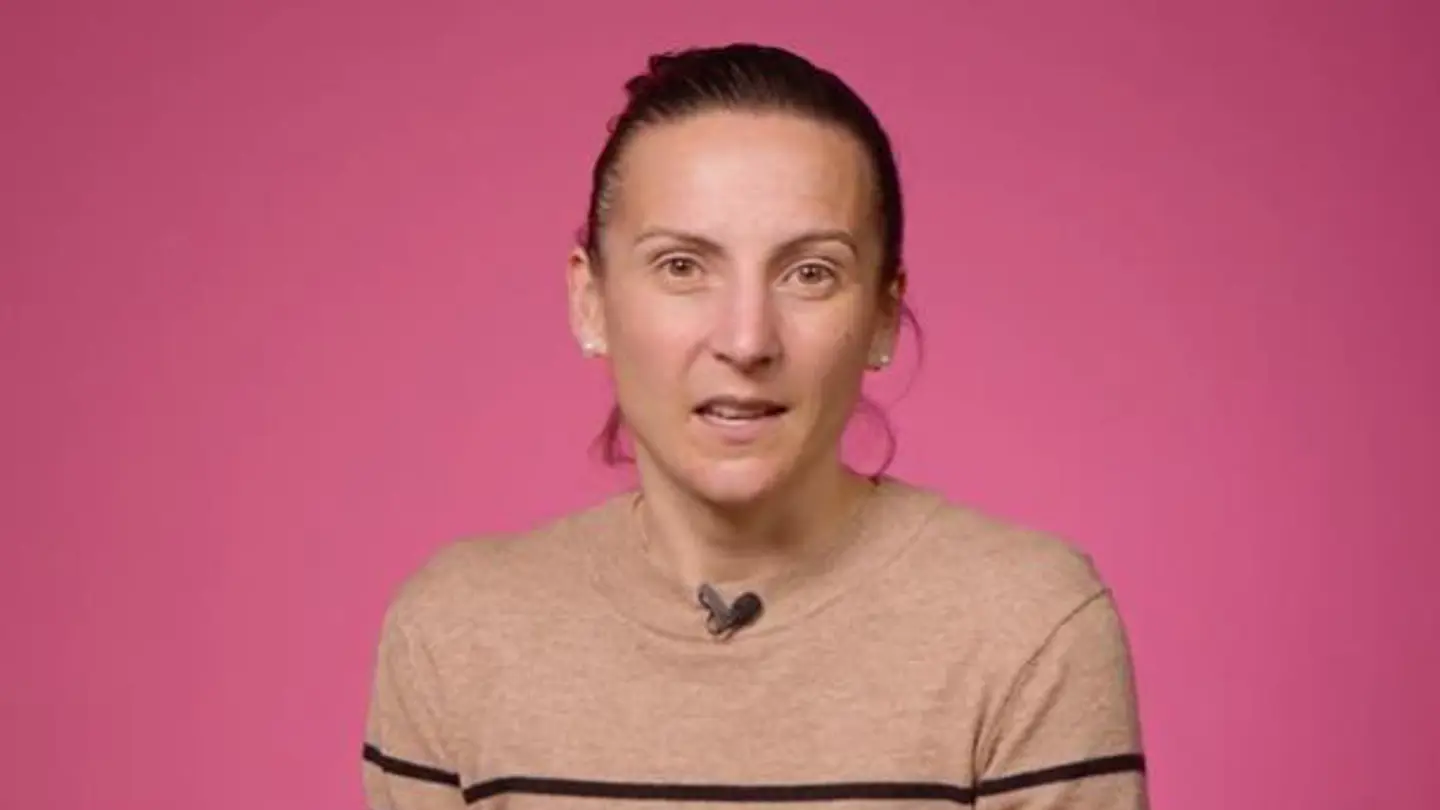

Hello, my name is Dr Anne Baker and I'm a lecturer in Occupational Therapy at Federation Uni on the Gippsland campus in Churchill. One thing I really love about teaching here is that we have small class sizes so that I get to really know my students and it means I can work with them to work on their personal learning goals and to help support them to become occupational therapists. An interesting thing about studying here is that we have brand new facilities that were developed in 2020 when the program first started, and we have a great teaching space which includes up-to-date equipment and assessment. So students are really getting the most relevant skills. And as they work to become occupational therapists, we also have excellent relationships with our clinical partners. So students get a great range of placement experiences and develop their skills in a range of different areas. A fun fact about me is that I'm also an occupational therapy driver assessor, which means that I can assess, make recommendations about people's fitness to drive. This is typically not an area that people think about when they think about occupational therapy, but occupation is more than just your job, so it includes things like self-care, so things like sharing and dressing, productive occupations, which does include work, and also things like driving, as well as leisure occupations, which are things that people do to occupy their time and their space. So this means as occupational therapists, we work from early on in people's lives, so pretty soon after birth, all the way through to advanced age and conditions that involve dying. We'd love you to come and study occupational therapy with us. We have a really great teaching team here, fantastic resources and I think you'll enjoy the student experience.