
What is it really like to study a Master of Engineering Technology (Mechanical) at Federation University?
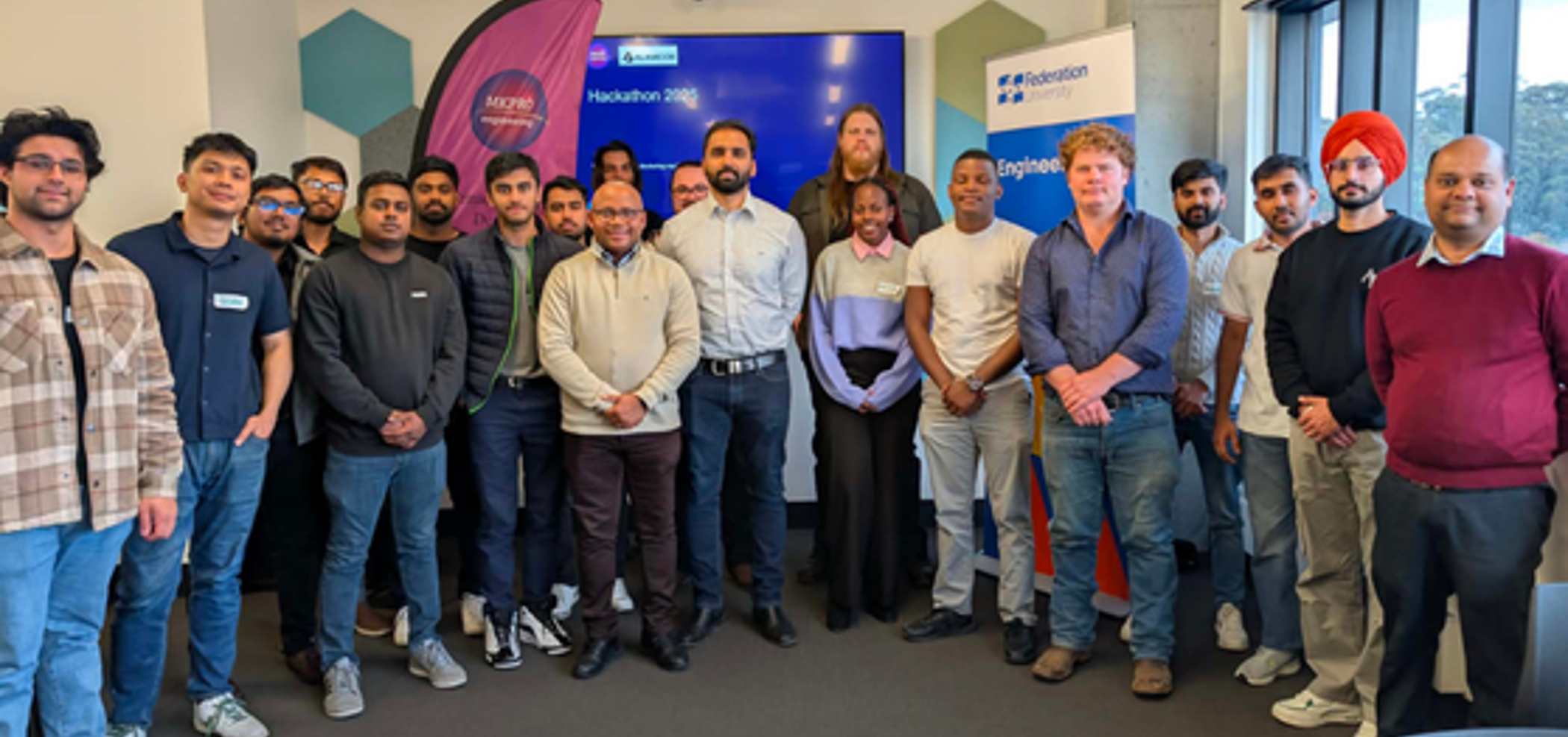
One of Gian's favourite experiences outside the classroom was taking part in Federation University's 2025 Hackathon, collaborating with fellow engineering students to tackle real-world challenges.
There are moments in life when staying where you are feels easier than taking the risk of starting again.
For Gian, that moment arrived after years working in aviation engineering in the Philippines.
He'd built a career with Singapore Airlines Engineering, coordinating the people, materials and logistics that kept aircraft maintenance running smoothly. The work was demanding, technical and rewarding. It had given him valuable industry experience and a clear understanding of how engineering teams solve problems under pressure.
Many people would have continued along that path.
Instead, Gian chose to leave it behind.
Not because he'd fallen out of love with engineering, but because he wanted to understand it more deeply.
"I wanted somewhere I could explore more and improve as a student," he said.
That decision led him thousands of kilometres from home to Federation University in regional Victoria, where he's now studying a Master of Engineering Technology (Mechanical) and preparing for the next stage of his career.
Looking back, he doesn't see it as beginning again.
He sees it as building on everything he'd already learned.
Choosing the place that felt right
When Gian first started researching universities in Australia, he wasn't short of options.
His education agent presented courses across Melbourne, Brisbane, Perth and regional Victoria. Like many international students, he spent months comparing programs, thinking about where he wanted to live and imagining what life might look like after graduation.
But he wasn't searching for Australia's biggest city.
He was searching for the right environment to grow.
"I wanted a more peaceful and quiet life in regional Ballarat," he said.
That decision surprised some people.
For many international students, studying in Australia often means heading straight to a capital city. Gian saw things differently.
He wanted somewhere he could focus on learning without feeling overwhelmed by the pace of city life. Somewhere that would allow him to settle into a new country while building the knowledge and confidence he hoped would shape the next chapter of his career.
The more he looked into Federation University, the more it felt like the right fit.
The course itself played a big part in that decision.
Subjects such as robotics, mechanical systems design and finite element analysis immediately captured his attention because they aligned with the areas of engineering he wanted to explore.
"I saw how competitive the mechanical engineering program was here at Federation University," Gian said.
Those subjects represented something he'd been looking for.
A chance to challenge himself.
A chance to specialise.
A chance to move beyond the work he already knew and prepare for opportunities that lay ahead.
Receiving a scholarship made studying in Australia even more achievable.
"I'm currently part of the Academic Excellence Scholarship," Gian said.
"It eases my burden in having to pay all my bills and actually progress in my studies."
Like many international students, Gian had carefully considered the financial commitment involved in studying overseas.
The scholarship didn't simply reduce those pressures. It gave him the freedom to spend less time worrying about expenses and more time investing in the reason he'd come to Australia in the first place.
Finding home where he least expected it
Moving overseas changes far more than your postcode.
It changes the rhythm of everyday life.
Family dinners become phone calls across time zones.
Simple routines suddenly feel unfamiliar.
Even the weather can come as a shock.
For Gian, that adjustment arrived almost immediately.
"The cold," he laughed.
Ballarat's winters were unlike anything he'd experienced growing up in the Philippines.
But while the temperature took some getting used to, something else quickly stood out.
"My experience living and studying here in regional Ballarat has been good," he said.
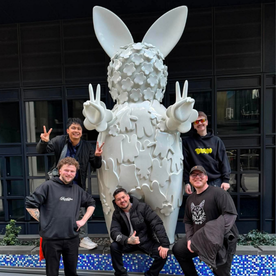
It's a simple sentence, but it says something many international students hope to experience.
Feeling at home isn't about replacing where you've come from.
It's about finding people who make a new place feel welcoming.
That feeling grew gradually through everyday moments.
Conversations with classmates after lectures.
Working alongside other students on projects.
Getting to know lecturers who understood that moving overseas involves challenges well beyond university study.
Those experiences gave Gian something he hadn't expected to find so quickly.
A genuine sense of belonging.
For someone who had left behind an established career, family and familiar surroundings, that made all the difference.
Rediscovering engineering
Returning to university after working professionally gave Gian a different perspective from many of his classmates.
He wasn't learning engineering from the beginning.
He already understood how engineering projects came together, how teams communicated and how important every decision could be when people's safety depended on the outcome.
Now he had the opportunity to ask deeper questions.
Why are certain systems designed this way?
How can new technologies improve existing processes?
What skills will engineers need as the profession continues to evolve?
Those questions are helping shape his experience in the postgraduate engineering course.
Advanced robotics.
PLC programming.
Finite element analysis.
Mechanical systems design.
Each subject has challenged him to think differently while building on the knowledge he already brought from industry.
Yet some of the most valuable lessons have come from places he never expected.
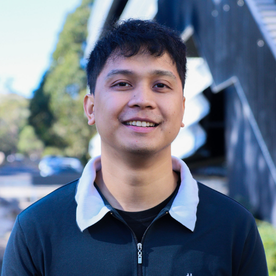
For Gian, those skills have become just as important as any technical concept.
Engineering is rarely about one person finding the answer.
It's about people with different ideas working together to solve complex problems.
And that's exactly what he's preparing to do.
Preparing for the moment that matters
For Gian, one opportunity captures everything he'd hoped to find when he chose Federation University.
A chance to step into Australia's engineering industry before graduating.
Like many students beginning a postgraduate degree, he wanted more than advanced technical knowledge. He wanted to understand how engineering works in the real world and feel confident walking into his first role after university.
That's why the opportunity to complete a paid Co-operative Education (Co-op) placement has become one of the most exciting parts of his degree.
When Gian enrolled, the industry placement program had only recently been introduced for students studying the Master of Engineering Technology (Mechanical). He'll be among the first cohort to experience it.
"It gives me a good grip on what my expectations are going into industry," he said.
For someone who has already worked as an engineer overseas, that experience offers something unique.
Engineering principles may be universal, but every country has its own workplace culture, standards and ways of solving problems.
The Co-op placement gives Gian the opportunity to experience Australia's engineering industry from the inside, applying the technical knowledge he's developed throughout his degree while learning how local engineering teams collaborate, communicate and innovate.
Rather than waiting until graduation to begin building professional connections, he'll start doing that while he's still a student.
That experience is valuable in itself.
Being paid while gaining it is another advantage.
"My paid placement will not only support me throughout my studies at Federation University, but it also eases my financial burden," Gian said.
For many international students, studying overseas is a significant financial commitment.
Having the opportunity to earn an income while gaining industry experience can help ease that pressure, while also providing something equally valuable: confidence.
Confidence that what they've learned in the classroom translates into the workplace.
Confidence that they're developing the skills employers are looking for.
And confidence that graduation won't feel like stepping into the unknown.
Looking back over the past two years, Gian believes every project, every assignment and every conversation has helped prepare him for that next step.
"Federation University equips you with the right set of skills that you need when you go into placement and when you start in the industry," he said.
Looking ahead with confidence
It's easy to think the biggest decision Gian made was choosing which university to attend.
In reality, it happened much earlier.
It was the moment he decided to leave behind a career he'd already built.
Walking away from familiar routines, professional networks and the certainty that comes with experience isn't something people do lightly. It takes confidence to believe that investing in yourself today will create opportunities tomorrow.
That belief is what brought Gian to Australia.
Since arriving in Ballarat, he's challenged himself academically, adapted to life in a new country and discovered that some of the most important lessons have happened outside the lecture theatre.
He's strengthened his technical knowledge while learning to communicate more effectively, collaborate with people from different backgrounds and approach complex problems with a broader perspective.
Along the way, Ballarat has become far more than the place where he's studying.
It's become somewhere he feels comfortable building a future.
Looking back, the move doesn't feel like pressing pause on his career.
Instead, it feels like the natural next chapter.
The experience he gained working in aviation engineering gave him a strong foundation.
His postgraduate studies are helping him build on it.
Soon, he'll take another step forward through his Co-operative Education (Co-op) placement, applying everything he's learned in an Australian engineering workplace while continuing to develop the skills that will shape his career for years to come.
For prospective students considering whether studying overseas is worth the leap, Gian's story isn't about starting over.
It's about recognising that growth sometimes means leaving behind what feels comfortable in order to create new possibilities.
And for him, that decision has already begun opening doors.
Inspired by Gian's story?
If you're looking to build on your engineering experience or take the next step towards an engineering career in Australia, Federation University's Master of Engineering Technology (Mechanical) combines advanced technical learning with practical industry experience. Through a paid Co-operative Education (Co-op) placement, you'll have the opportunity to apply your skills in a professional engineering workplace before you graduate, while developing the confidence and connections to help launch your career. Explore the course, learn about scholarships and discover where a Federation postgraduate mechanical engineering degree could take you.
Frequently Asked Questions
Studying a Master of Engineering Technology (Mechanical) in Australia gives you the opportunity to develop advanced technical knowledge while gaining insight into one of the world's most innovative engineering industries. For Gian, returning to university wasn't about changing careers. It was about expanding on the mechanical engineering experience he already had and preparing for opportunities in Australia. Through subjects such as robotics, mechanical systems design and finite element analysis, students develop the technical and professional skills needed across industries including manufacturing, renewable energy, automation, transport and advanced engineering.
Like many international students, Gian compared universities across Australia before making his decision. While studying in Melbourne, Brisbane and Perth were all possibilities, he was looking for somewhere that would challenge him academically while offering a quieter place to live. Federation University's engineering courses stood out because of the industry-focused curriculum, advanced engineering subjects and the opportunity to complete a paid Co-operative Education (Co-op) placement. Receiving a tuition fee scholarship also helped make studying in Australia more achievable.
Regional Victoria offers a different university experience to Australia's major cities. For Gian, studying in Ballarat meant having the space to focus on his degree while becoming part of a welcoming university community. Although adjusting to Ballarat's colder climate took time, he says the support he found at Federation University quickly made the campus feel like home. Many students value the opportunity to build stronger relationships with classmates and lecturers while enjoying a more relaxed lifestyle than they might experience in a capital city.
Yes. Federation University's Master of Engineering Technology (Mechanical) includes a minimum of 30 days (225 hours) of paid Co-operative (Co-op) placement. This allows students to apply what they've learned in a professional engineering workplace before graduating. Gian believes this experience will help him better understand Australia's engineering industry, build local professional networks and develop confidence before starting his career. Gaining practical experience while studying can also make the transition from university into full-time employment much smoother.
Eligible students completing the Co-operative Education (Co-op) placement receive payment while working in industry. For Gian, this was an unexpected benefit because the placement program had only recently been introduced into his course. Being paid allows students to gain valuable Australian industry experience while helping to reduce some of the financial pressures that can come with studying overseas. It also provides an opportunity to develop workplace skills and professional connections before graduation.
Students studying a postgraduate engineering course at Federation University develop a combination of advanced technical knowledge and professional skills. Gian has strengthened his understanding of robotics, PLC programming, finite element analysis and mechanical systems design while also improving communication, teamwork and time management through practical projects and collaboration with classmates. These workplace skills are essential because successful engineers don't only solve technical problems. They also work effectively with multidisciplinary teams, manage competing priorities and communicate complex ideas clearly.
Moving overseas involves far more than adapting to a new course. International students are also adjusting to a different culture, community and way of life. Gian says receiving an Academic Excellence Scholarship reduced financial pressure and allowed him to focus on his studies. Just as importantly, he found a welcoming campus community that helped Ballarat feel like home. Federation University also offers dedicated support services for international students, including academic assistance, wellbeing support, careers guidance and opportunities to connect with other students throughout the year.
A Master of Engineering Technology (Mechanical) can prepare graduates for careers across manufacturing, automation, renewable energy, transport, defence, mining, construction and advanced engineering industries. Students develop the technical expertise and professional capabilities employers are seeking, while opportunities such as paid Co-operative Education (Co-op) placements help bridge the gap between university and industry. For Gian, the degree represents the next step in an engineering career that began in aviation and is now expanding into new opportunities within Australia's engineering sector.