
From Co-op to career: How one IT student landed a full-time job before graduating
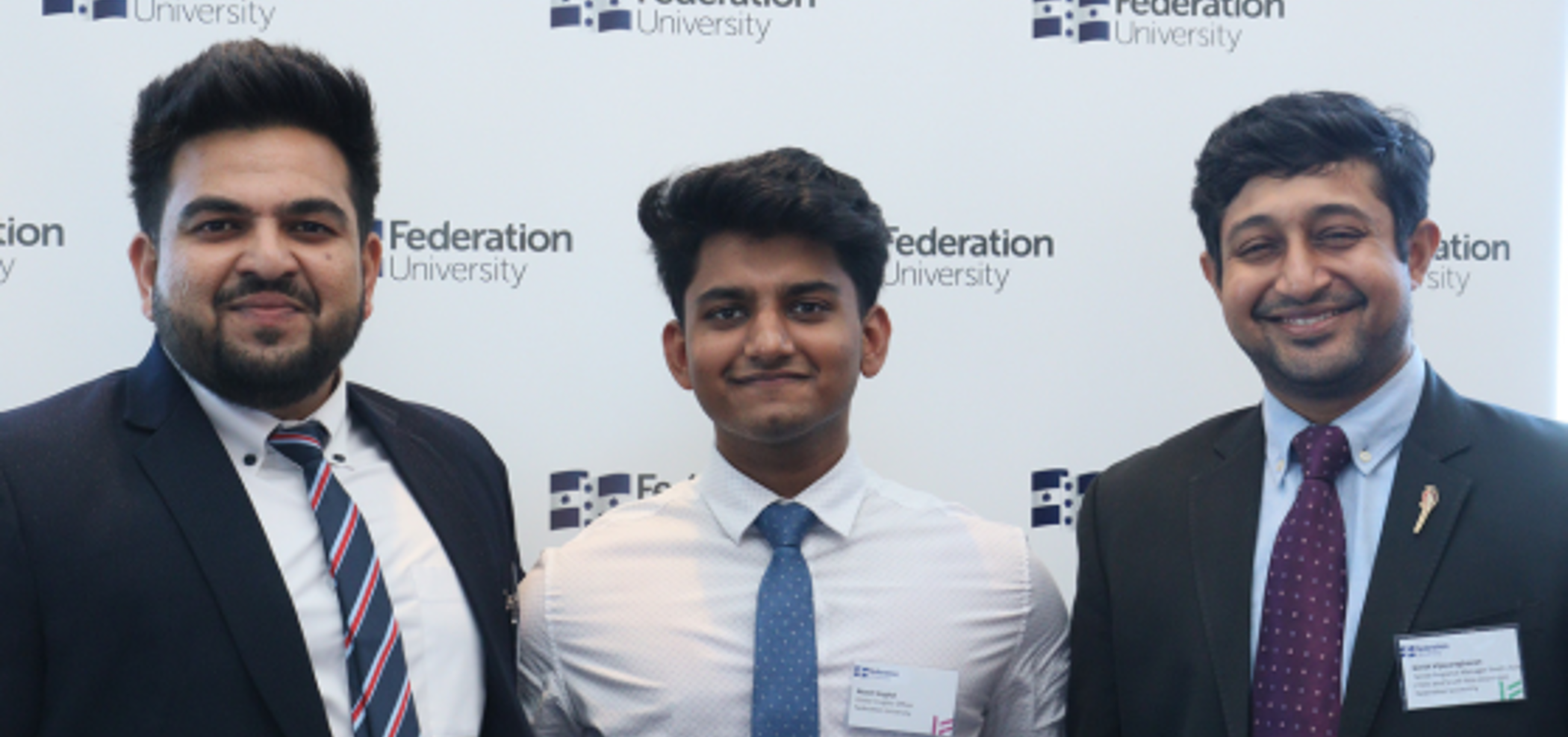
For Akash, feeling part of the team on placement was just as valuable as the industry experience he gained.
Some university experiences change what happens after graduation.
Others change what happens before it.
Before Akash had completed the Bachelor of Information Technology, he had already achieved something many students spend months working towards after finishing university. He'd secured a full-time job in his chosen field.
The opportunity didn't come through endless job applications or luck.
It grew from a Co-operative Education (Co-op) placement that allowed him to apply what he'd learnt in the classroom, build confidence in a professional workplace and demonstrate the skills employers were looking for.
For students considering a career in Information Technology, his experience highlights something increasingly important. A degree builds knowledge, but the opportunity to apply that knowledge in a real workplace can shape where your career begins.
Finding the right path to Australia
Long before he arrived in Ballarat, Akash knew he wanted to study overseas.
While he explored universities around the world, Australia kept drawing him back. He was captivated by the country's reputation, the lifestyle he saw in photos of Melbourne and the possibility of building a future here.
"I always had a dream to pursue my education somewhere other than my country," he says.
As he researched universities, he wasn't simply comparing rankings or course lists. He was looking for a university that offered the right balance of business and technology, two areas he knew he wanted to combine throughout his career.
During that search, he connected with Federation University's support team, who helped him narrow down the options and identify a course that aligned with his interests.
"I found a course which was a mixture of both and I thought, 'Wow, this is the best thing that could happen to me.'"
That course was the Bachelor of Information Technology.
The more he researched, the more confident he became in his decision.
Soon, months of planning turned into paperwork, visa applications and finally a one-way flight to Australia.
"The next thing I knew I was on a flight to Melbourne, and I was at Federation," he recalls. "I thought, 'Wow, my journey has just taken off.'"
Learning where technology meets people
For Akash, one feature of the course stood out from the beginning.
It wasn't a particular subject or software platform.
It was the opportunity to gain real workplace experience before graduating.
Like many international students, he understood that employers were looking for more than technical knowledge. They wanted graduates who could communicate, collaborate and adapt in professional environments. Choosing a degree that included industry experience felt like an investment in his future.
"Choosing a course with placements and industry experience is very important for students, especially for international students like me," he says.
Back home, practical experience was already embedded in many university courses, so he appreciated finding a similar approach in Australia.
He saw Federation University's Co-operative Education (Co-op) model as more than an internship program. It was a chance to learn alongside experienced professionals, receive personalised guidance and begin developing the workplace skills that can't always be taught in a lecture theatre.
"I believe it is a new future that Federation is giving its students," he says. "Students can get personalised guidance and personalised mentors."
At the time, he hoped the experience would make him more employable after graduation.
He never imagined it would lead directly to a full-time job.
The lessons that don't come from textbooks
When Akash began his Co-op placement with Federation University's International team, he arrived with a solid understanding of business information systems, data and analytics.
What he quickly realised was that technical knowledge was only part of being successful in the workplace.
"I really lacked professional workplace knowledge," he says.
"It was about how things work in a workplace, how you communicate, how you collaborate. That's something the internship helped me with."
Rather than observing from the sidelines, Akash became part of the team.
He contributed to projects involving business analysis, marketing analysis, data analytics and risk analysis, applying concepts from his degree to genuine organisational challenges while learning how decisions were made in a professional environment.
Those experiences changed the way he thought about his future.
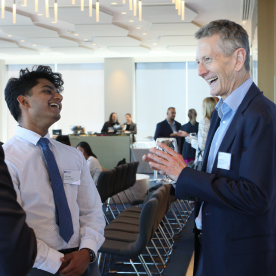
As the placement progressed, so did his confidence.
Managers trusted him with increasingly meaningful work. Colleagues became mentors. The office stopped feeling unfamiliar and started to feel like somewhere he belonged.
"The workplace just became a place where I could call my second home," he says.
By the time his placement came to an end, Akash had done far more than complete a university requirement.
He had shown what he was capable of.
His managers were equally impressed.
"I believe my bosses and my managers were really happy with my work," he says.
Then came the opportunity every student hopes for.
"I'm glad to inform you that I already have a full-time job, which I was able to get with the help of my internship."
Instead of beginning a job search after graduation, Akash had already started building the career he'd imagined when he first boarded that flight to Australia.
Finding a place to belong
Moving overseas means more than changing universities.
It means learning how to navigate a new country, adapt to a different education system and build a life from scratch.
For many international students, that transition can feel overwhelming.
For Akash, studying in regional Victoria made it easier than he expected.
Rather than arriving in the fast pace of a major city, he found himself in Ballarat, where life felt a little quieter, the campus community was close-knit and everyday life was easier to navigate while settling into Australia.
"Living and studying in a regional area, it was a fantastic experience for me," he says.
"It was easier for me to understand my surroundings and the culture because it's a quieter and more peaceful place."
That environment helped him focus on more than his studies.
Living close to campus made it easier to build friendships, spend time with classmates and develop relationships with staff who quickly became familiar faces. Instead of feeling like just another student, he felt part of the university community.
"I felt more attached. I felt more included."
Those connections extended beyond the classroom.
Throughout his studies, Akash found lecturers, mentors and professional staff who were willing to answer questions, provide guidance and genuinely invest in his success.
"The support that I got from the staff and my peers and mentors was absolutely astonishing," he says.
"I felt that I was the centre of attention for all the people that I met."
Looking back, it's that sense of belonging that stays with him just as much as the qualification itself.
"I always believe that even after I graduate, a part of Federation will always lie in me."
For students considering studying in regional Australia, his experience highlights something that's often difficult to measure when comparing universities online. A supportive community can make just as much difference as the course itself.
A career that started before graduation
When Akash first began researching universities from overseas, he hoped his degree would prepare him for a successful career.
What he couldn't have predicted was that his career would begin while he was still studying.
His Co-operative Education placement gave him the opportunity to apply his knowledge in a professional workplace, develop practical skills and build relationships with people who recognised his potential. Those experiences ultimately led to a full-time role before he had completed his Bachelor of Information Technology.
Looking back, he sees that practical experience as one of the defining parts of his university education.
"Placements and internships are a big factor in your career," he says.
"They give you that starting launch which every student needs."
It's advice he now shares with students who are considering following a similar path.
"The experience that you'll gain in Federation is something you'll remember your whole life," he says.

His story is a reminder that choosing a university isn't only about the qualification you'll earn.
It's also about the opportunities you'll have while you're studying.
For Akash, those opportunities began with a decision to study in Australia.
They continued through meaningful workplace experience, supportive mentors and a community where he felt he belonged.
And they culminated in something many graduates are still searching for after university: the confidence, experience and professional network to step straight into a career.
Ready to build your own IT career?
Akash's experience shows how combining academic learning with real workplace experience can help you graduate with more than technical knowledge. Through Federation University's Bachelor of Information Technology, you'll have opportunities to develop practical skills, work on industry-focused projects and participate in the University's Co-operative Education (Co-op) model, helping you build professional confidence while you study.
Whether you're interested in business information systems, cybersecurity, software development, data analytics or digital transformation, you'll graduate with the knowledge and workplace experience to take the next step in your career.
Explore our Bachelor of Information Technology courses and discover how Co-op can help you turn your studies into a career.
Frequently Asked Questions
Yes. Federation University's Bachelor of Information Technology includes opportunities to gain practical workplace experience through the University's Co-operative Education (Co-op) model. Students apply their learning in real workplaces, develop professional skills and build industry connections before graduating. As Akash's experience shows, these opportunities can also open doors to graduate employment.
Internships give students the opportunity to apply technical knowledge in professional environments while developing communication, teamwork and problem-solving skills that employers value. For Akash, his internship became the pathway to a full-time position before he had even completed his degree, demonstrating how practical experience can strengthen career prospects.
Graduates can pursue careers across business information systems, software development, cybersecurity, cloud technologies, business analysis, data analytics, systems administration and digital transformation. The broad foundation of the degree allows students to develop technical expertise while exploring different areas of the technology industry.
Many international students appreciate Ballarat's welcoming community, affordable lifestyle and easy access to campus. Akash says studying in regional Victoria helped him understand Australian culture more easily, build friendships and feel included in the university community while adjusting to life in Australia
Co-operative Education combines university study with authentic workplace experience. Students work with industry or organisational partners to apply classroom learning to real projects, gain practical experience and develop professional skills before graduation. It bridges the gap between study and employment.
Federation University provides a range of services to help international students settle into university life, including academic support, student services, wellbeing resources and opportunities to connect with peers and mentors. Akash credits the encouragement he received from staff, mentors and classmates as an important part of his experience.
A Bachelor of Information Technology provides the technical knowledge and practical skills needed for a rapidly evolving industry. Students develop expertise across areas such as programming, business information systems, cybersecurity, data analytics and digital technologies while building the professional capabilities employers increasingly expect.
Employers often look for graduates who can demonstrate both technical ability and professional experience. Workplace learning helps students understand organisational culture, communicate effectively, collaborate with colleagues and apply their knowledge in real situations. As Akash discovered, those experiences can sometimes lead directly to employment before graduation.