
Bachelor of Exercise and Sport Science
Choose to specialise in applied exercise programming, health or teaching, and discover how to plan and implement healthy living for diverse populations. Learn through industry placements, as well as practical experiences.

Course essentials
ATAR
If you receive an ATAR equal to or above the guaranteed ATAR, and meet the course prerequisites and any extra requirements, you're guaranteed a place.
A lowest adjusted ATAR shows the lowest selection rank (ATAR plus adjustments) offered a place last year. It's not a guaranteed entry score and changes annually.
Lowest adjusted 50.15
Guaranteed 50.00
Entry requirements
Credit
A full-time study load is 120 credits a year (usually four 15-credit units each semester). 120 credits equal one equivalent full-time student load (EFTSL). Each credit point equals about 10 hours of learning, so a 15-credit unit means roughly 150 hours.
Study mode
Study modes tell you how teaching and learning will be delivered for your course and include where and when classes can be scheduled, what you'll do and the tech you'll use.
On campus
Duration
Start dates
26 July 2027
Locations
Gippsland (blended)
Mt Helen (on campus)
Course overview
Turn your passion for sport, health and performance into a career with our Bachelor of Exercise and Sport Science—a degree designed to give you the knowledge, skills and real-world experience to succeed in a rapidly growing industry.
Industry-recognised qualification
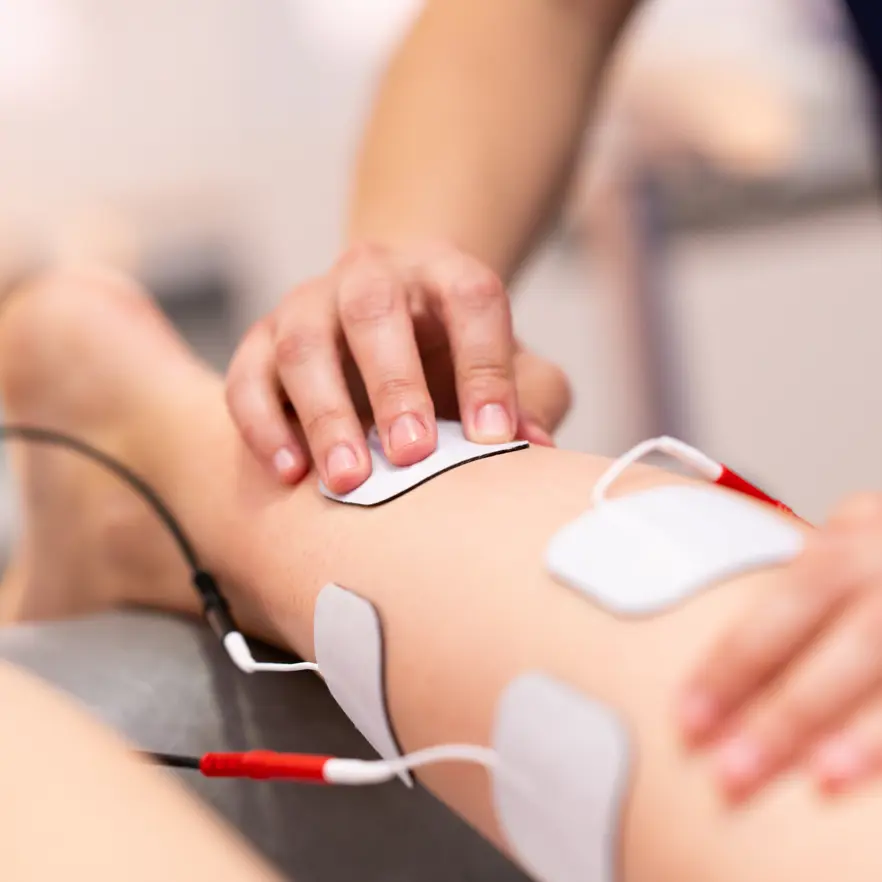
This accredited course* by Exercise and Sport Science Australia (ESSA), the peak professional body for exercise scientists, clinical exercise physiologists and sport scientists, enables graduates to acquire ESSA membership and practise as an Accredited Exercise Scientist (AES).
Build strong scientific and practical skills
You’ll develop a solid foundation in biomechanics, anatomy and physiology, health and exercise science. Then build upon this throughout the degree to expand your expertise across diverse population settings in human movement, sport science & performance, health promotion and evidence-based practise.
You can tailor your studies to your career interests in:
- Applied exercise programming
- Applied sport science
- Health promotion
- Diverse populations and inclusion
- Nutrition
- Psychology
- Business and management
- Data analytics
- Strength and conditioning
- Teaching and education
- Exercise Physiology
Flexible study options
Study in the way that suits you:
- On-campus in Ballarat, or
- Flexible delivery at Gippsland and Berwick
All delivery modes include a blend of hands-on practical classes, tutorials and online learning, supported by access to high-quality facilities, including our Health and Sports Precinct in Ballarat. Our Flexible delivery option benefits students by providing the opportunity to study and obtain work/life balance, as well as an enhanced learning experience to attend inter-campus classes at the world-class Ballarat facilities (once per semester in years 2 and 3). Our Ballarat delivery option offers students the ability to engage with our world-class facilities on a weekly basis, and to utilise the full extent of on-campus life, whilst still providing schedule flexibility.
Learn beyond the classroom
Our Bachelor of Exercise and Sport Science is Australia’s first Co-Operative course, designed directly with input from industry leaders to offer students genuine industry-based experiences to ensure they are career-ready. Industry placements are a key feature of this degree, where students will undertake 250 hours of practical experience. Through the co-operative features of the course, students will have the opportunity to undertake paid placements through elective units – the first exercise and sport science degree to offer paid placements – supporting students to become work-ready through their studies. Students will benefit from the strong partnerships with exercise and sport science organisations across local and state settings—building professional networks and confidence before you graduate. Students have the opportunity to participate in standard placements across a range of settings, including:
· Melbourne City Football Club
· AFL/AFLW football clubs
· VFL/VFLW football clubs
· Strength & Conditioning and High-Performance Centres
· School Sport Academies
· Recreational Gyms
· State Sporting Organisations/Institutes
Career-ready graduates
Upon graduation, you’ll be eligible for registration with ESSA and prepared for a wide range of careers in sport, fitness and health industries. Our graduates have gone on to work with leading organisations such as NBA, NBL, NFL, AFL, NRL & Life Saving Victoria.
Pathways to further study
This degree provides a strong pathway into postgraduate study, including:
- Clinical Exercise Physiology
- Master of Strength and Conditioning
- Teaching (Primary & Secondary)
Supportive learning environment
You’ll learn from experienced, supportive staff who are committed to delivering a high-quality, industry-relevant education, supported by state-of-the-art facilities and practical learning experiences.
Start your journey towards a dynamic career in exercise and sport science today.
*Ballarat and Gippsland ESSA full accreditation; Berwick undergoing accreditation in Q1, 2027.
Professional Accreditation
Exercise and Sport Science Australia (ESSA) Accredited Exercise Science professional standards.
IT requirements
To do this course you’ll need a fast and reliable computer and access to high-speed internet. Expect to use about 5GB of data per month for every unit you’re doing. Find out more about the minimum IT requirements for studying with us.
Got questions?
Call us on 1800 333 864, start a live chat or submit an enquiry.
Student support
The support we offer is second to none. Need academic help? No problem. Extra access or financial assistance? Let’s see what we can do. View our student services.
The fine print
The commencement of all courses is subject to available funding and enrolment quotas.
Everything in this course overview is correct at the time of being published. However, the University reserves the right to alter any course, procedure or fee. Please check for changes before you apply or enrol.
Federation University uses Victorian and Commonwealth Government funding (for eligible students) to deliver training.
School department
Exercise & Sport Science
Course co-ordinator
Emma Siesmaa
Career paths
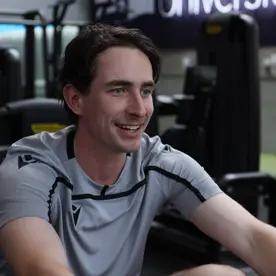
Sports scientist
Health promotion officer
Exercise programmer
Performance analyst
Rehabilitation programmer
Strength and conditioning coach
Exercise scientist
Exercise physiologist
Professional recognition
Fees and scholarships
Tuition fee information
Commonwealth Supported Places are subsidised by the Australian Government. The tuition fee is called the student contribution amount. The indicative fee above is based on a typical first-year enrolment for this course and should be used as a guide only. For 0.5 EFTSL (60 credit point) courses the certificate fee is displayed. Your fee will depend on the units you chose, your study load, the time it takes to complete your course and any approved credit you receive.
How it's calculated
The government sets the fee each year. The amount depends on the discipline area and band of each unit. 2026 annual student contribution amounts for 1 EFTSL (equivalent full-time student load) range from $4,738 (Band 1) to $17,399 (Band 4). The sample course structure below link to the EFTSL, Band and fee for each unit or you can use our unit search to find these details.
Other fees
You will also need to pay the Student Services and Amenities Fee (SSAF).
Fee assistance
If you're eligible for a HECS-HELP loan, you can defer the payment of all or part of your student contribution fee. If you’re also eligible for a SA-HELP loan, you can defer your SSAF payment too. You won’t have to start paying either loan back until your income reaches the compulsory repayment threshold.
Scholarships
There’s a range of scholarships and grants available. Find out what you can apply for.
Course details
Start dates
Semester 1, 2027
1 March 2027
Locations
Berwick (blended)
Gippsland (blended)
Mt Helen (on campus)
Semester 2, 2027
26 July 2027
Locations
Berwick (blended)
Gippsland (blended)
Mt Helen (on campus)
Information
- Our Mt Helen, SMB, Camp St and Gillies St campuses are located in Ballarat.
- Blended delivery means you'll be doing some of your classes online and some, like labs, on campus.
Contact hours
16-20 hours per week
Work integrated learning
Placement
This course requires students to complete 250 hours (33 days) as part of the placement requirements.
Students will complete two work integrated learning units (non-paid) focusing on theoretical content of the industry, soft skills and placement hours. Units are completed in 2nd and 3rd year of the course. Additionally, two elective Co-Op units will be added to the course rules for students to elect to complete in their 3rd year (within their current elective unit structure) where they will be able to undertake paid placements.
Sample course structure
Here’s what the course structure could look like. It’s just an example (so don’t use it for enrolment). Interested in the details? You can find current course structure or select a single unit name below to find out what it’s about and how much it costs.
- Anatomy & Physiology for Human Movement 115 credit pointsEXSCI1801
- Foundations of Exercise Programming and Prescription15 credit pointsEXSCI1802
- Motor Learning and Control15 credit pointsEXSCI1703
- Psychosocial Aspects of Health Behaviour15 credit pointsHEALT1705
- Anatomy & Physiology for Human Movement 215 credit pointsEXSCI1803
- Introduction to Biomechanics15 credit pointsEXSCI1701
- Principles of Research in Exercise Science15 credit pointsEXSCI1704
- Health and Physical Activity Promotion15 credit pointsHEALT1706
- Exercise Physiology15 credit pointsEXSCI2171
- Functional Human Anatomy15 credit pointsEXSCI2172
- Applied Biomechanics15 credit pointsEXSCI2008
- Work Integrated Learning for Exercise Science 115 credit pointsEXSEL2001
- Exercise Assessment, Programming & Delivery 115 credit pointsEXSCI2174
- Nutrition for Health, Exercise and Performance15 credit pointsHEALT2175
- Injury Prevention and Management in Human Movement15 credit pointsEXSCI3173
- Inclusion Through The Lifespan15 credit pointsEXSCI3178
- Psychology of Sport and Exercise15 credit pointsEXSCI2173
- Advanced Motor Control and Learning15 credit pointsEXSCI3171
- Exercise Assessment, Programming & Delivery 215 credit pointsEXSCI3179
- Work Integrated Learning for Exercise Science 215 credit pointsEXSEL3001
- Physical Preparation for Sport15 credit pointsEXSCI3002
- Applied Exercise Science15 credit pointsEXSCI3177
Electives
Entry requirements
Entry requirements (year 12)
- Units 3 and 4: a study score of at least 20 in any English and ATAR.
- Satisfactory Completion Units 1 and 2 in Maths: General Mathematics, Maths: Mathmatical Methods or Maths: Specialist Mathematics or
- Satisfactory Completion Unit 3 and 4 Maths: Any study combinaton
Entry requirements (non year 12)
Entire academic record:
This course uses the applicant's entire academic record as part of its selection considerations.
Applicants with higher education study
Prerequisite (compulsory):
Previous higher education studies with results at a pass level, including any single subjects of study, or successful completion of a tertiary preparatory course, such as the Federation Access Studies course (FAST).
Applicants with vocational education and training study
Prerequisite (compulsory):
Successful completion of a relevant VET qualification at Certificate III level or higher.
Applicants with work and life experience
Applicants who have not completed secondary education, or undertaken any TAFE or university studies will not be eligible for entry into this course. Applicants in this category should consider a pathway course, such as the Federation Access Studies course (FAST).
Admission criteria for applicants with work and life experience
Based on life experiences, commitment to the industry and understanding of course requirements. Applicants will need to submit a personal statement detailing experience related to exercise and/or sport, what career they envisage from this degree, and other life experiences that add value to the application.
Extra requirements
Essential Requirements
Working with children check
Compulsory: Applicants will be required to hold a valid Working with Children (WWC) Check for the relevant state prior to undertaking professional placements as part of this course. For more information see Working with Children in Victoria.
How you apply will depend on your current situation – school leaver, tertiary background or life experience – and whether you’re also applying for courses at other institutions. Visit our how to apply page to find out more.
Ready to fill out your application? You might need these codes:
- VTAC application
- Yes
- VTAC code
- 3702637651 - Berwick (blended)
3702537651 - Gippsland (blended)
3700537651 - Mt Helen (on campus) - Direct application
- Yes
- Federation University code
- PK5
Hear from our staff
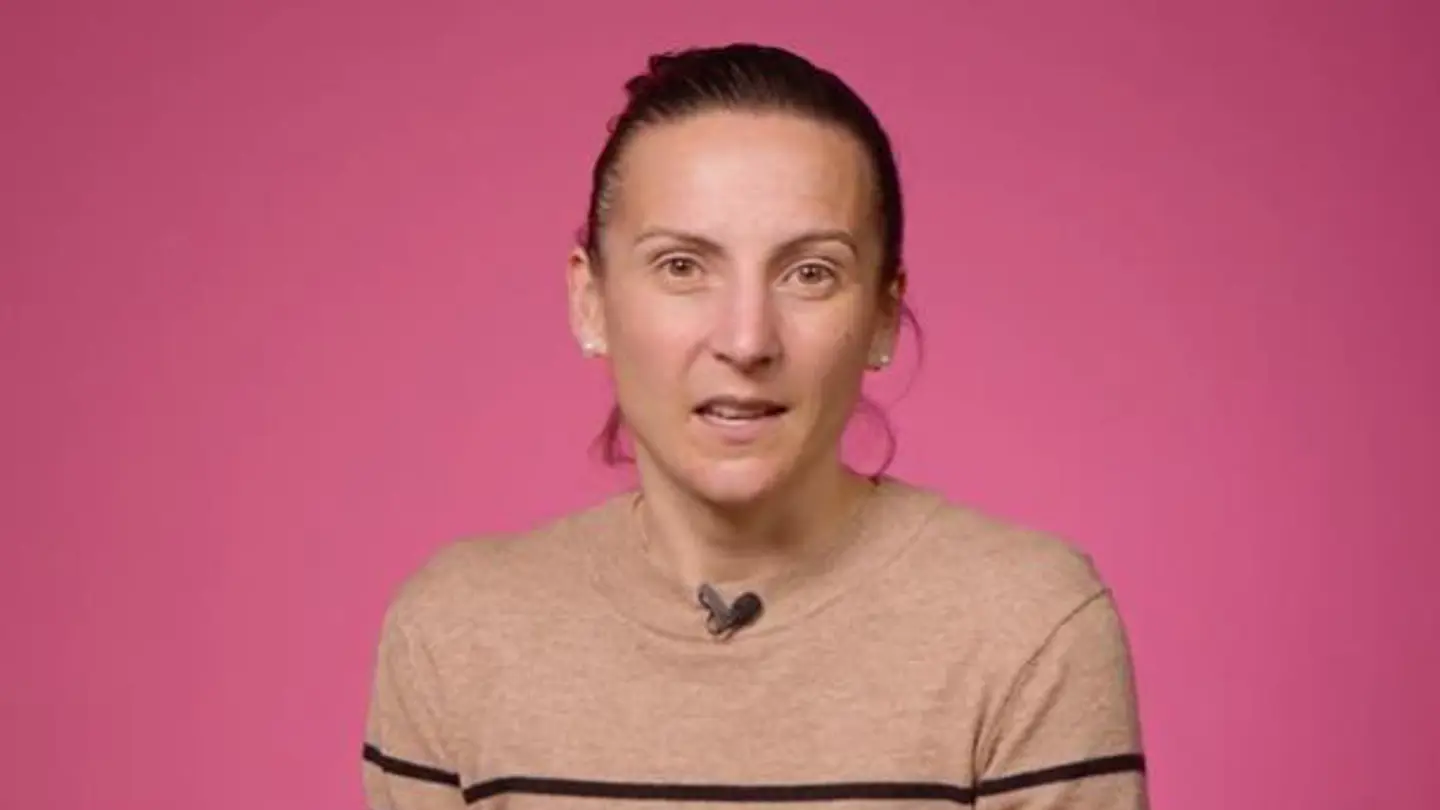

Hello, my name is Dr Anne Baker and I'm a lecturer in Occupational Therapy at Federation Uni on the Gippsland campus in Churchill. One thing I really love about teaching here is that we have small class sizes so that I get to really know my students and it means I can work with them to work on their personal learning goals and to help support them to become occupational therapists. An interesting thing about studying here is that we have brand new facilities that were developed in 2020 when the program first started, and we have a great teaching space which includes up-to-date equipment and assessment. So students are really getting the most relevant skills. And as they work to become occupational therapists, we also have excellent relationships with our clinical partners. So students get a great range of placement experiences and develop their skills in a range of different areas. A fun fact about me is that I'm also an occupational therapy driver assessor, which means that I can assess, make recommendations about people's fitness to drive. This is typically not an area that people think about when they think about occupational therapy, but occupation is more than just your job, so it includes things like self-care, so things like sharing and dressing, productive occupations, which does include work, and also things like driving, as well as leisure occupations, which are things that people do to occupy their time and their space. So this means as occupational therapists, we work from early on in people's lives, so pretty soon after birth, all the way through to advanced age and conditions that involve dying. We'd love you to come and study occupational therapy with us. We have a really great teaching team here, fantastic resources and I think you'll enjoy the student experience.