
Doctor of Philosophy
Throughout this Doctor of Philosophy (PhD) in Health you will work with a principal supervisor to refine and complete a comprehensive research project.

Course essentials
Entry requirements
Credit
A full-time study load is 120 credits a year (usually four 15-credit units each semester). 120 credits equal one equivalent full-time student load (EFTSL). Each credit point equals about 10 hours of learning, so a 15-credit unit means roughly 150 hours.
Study mode
Study modes tell you how teaching and learning will be delivered for your course and include where and when classes can be scheduled, what you'll do and the tech you'll use.
Online
Duration
Start dates
Locations
Camp St (on campus)
Gippsland (on campus)
Mt Helen (on campus)
Online
Course overview
The Doctor of Philosophy (PhD) is an elite higher degree qualification completed solely by research. Graduates at this level will have systemic and critical understanding of a substantial and complex body of knowledge at the frontier of a discipline or area of professional practice. Undertaken over four years of full-time study, the PhD enables a candidate to create authoritative capabilities for independent research, demonstrated through the completion of a substantial thesis, or creative works with exegesis. Throughout their research journey, the candidate works closely with a supervisory team who provide academic guidance and support. Candidates in this course would undertake a research project within the broad areas of nursing and allied health.
IT requirements
To do this course you’ll need a fast and reliable computer and access to high-speed internet. Expect to use about 5GB of data per month for every unit you’re doing. Find out more about the minimum IT requirements for studying with us.
Got questions?
Call us on 1800 333 864, start a live chat or submit an enquiry.
Student support
The support we offer is second to none. Need academic help? No problem. Extra access or financial assistance? Let’s see what we can do. View our student services.
The fine print
The commencement of all courses is subject to available funding and enrolment quotas.
Everything in this course overview is correct at the time of being published. However, the University reserves the right to alter any course, procedure or fee. Please check for changes before you apply or enrol.
Federation University uses Victorian and Commonwealth Government funding (for eligible students) to deliver training.
School department
Graduate Research School
Course co-ordinator
Andrew Barton
Career paths
The course creates opportunities for advanced and independent professional practice in careers that entail complex research and in a variety of academic, industry, community and government settings.

Fees and scholarships
Tuition fee information for masters by research and doctorate (PhD) courses
Research Training Program (RTP) funded place
If you're a domestic student your application will automatically be considered for a Research Training Program (RTP) place where your tuition fees are covered by the Australian Government.
Scholarships
There’s a range of scholarships and grants available. Find out what you can apply for.
Course details
Start dates
Anytime during the year (2027)
Locations
Berwick (on campus)
Camp St (on campus)
Gippsland (on campus)
Mt Helen (on campus)
Online
Information
- Our Mt Helen, SMB, Camp St and Gillies St campuses are located in Ballarat.
- Online learning is only an option if you’re not studying on an international student visa.
Contact hours
Expect to put in at least 38 hours per week (full time) or 19 hours per week (part time).
Elective
Elective
Elective
Elective
Elective
Elective
Elective
Elective
Elective
Elective
Elective
Elective
Elective
Entry requirements
To be eligible for admission as a candidate for the degree of Doctor of Philosophy an applicant must:
- possess a degree that is the equivalent to an AQF Bachelor degree with Honours with first class or second class, first division, for entry to a PhD or at least third class honours for entry to a Masters by Research, or
- possess a Masters degree with a relevant research component that is equivalent to a Masters degree from Federation University and an equivalent result as outlined above, or
- submit other evidence of relevant qualifications and experience, or research experience, to confirm that the applicant possesses a level of relevant research experience and capacity equivalent to an award in either point above, and
- satisfy such additional requirements for admission to a PhD candidature, if any, as may be prescribed by the Graduate Research School Board
An In-person or online interview with one or more course representative
English language requirements
Academic IELTS of 6.5 overall with no band less than 6.0; or equivalent
Extra requirements
If you’re only applying for this course, do it via direct application.
Ready to fill out your application?
You'll need this code:
Direct application
Federation University code
- Direct application
- Yes
- Federation University code
- HE0
Hear from our staff
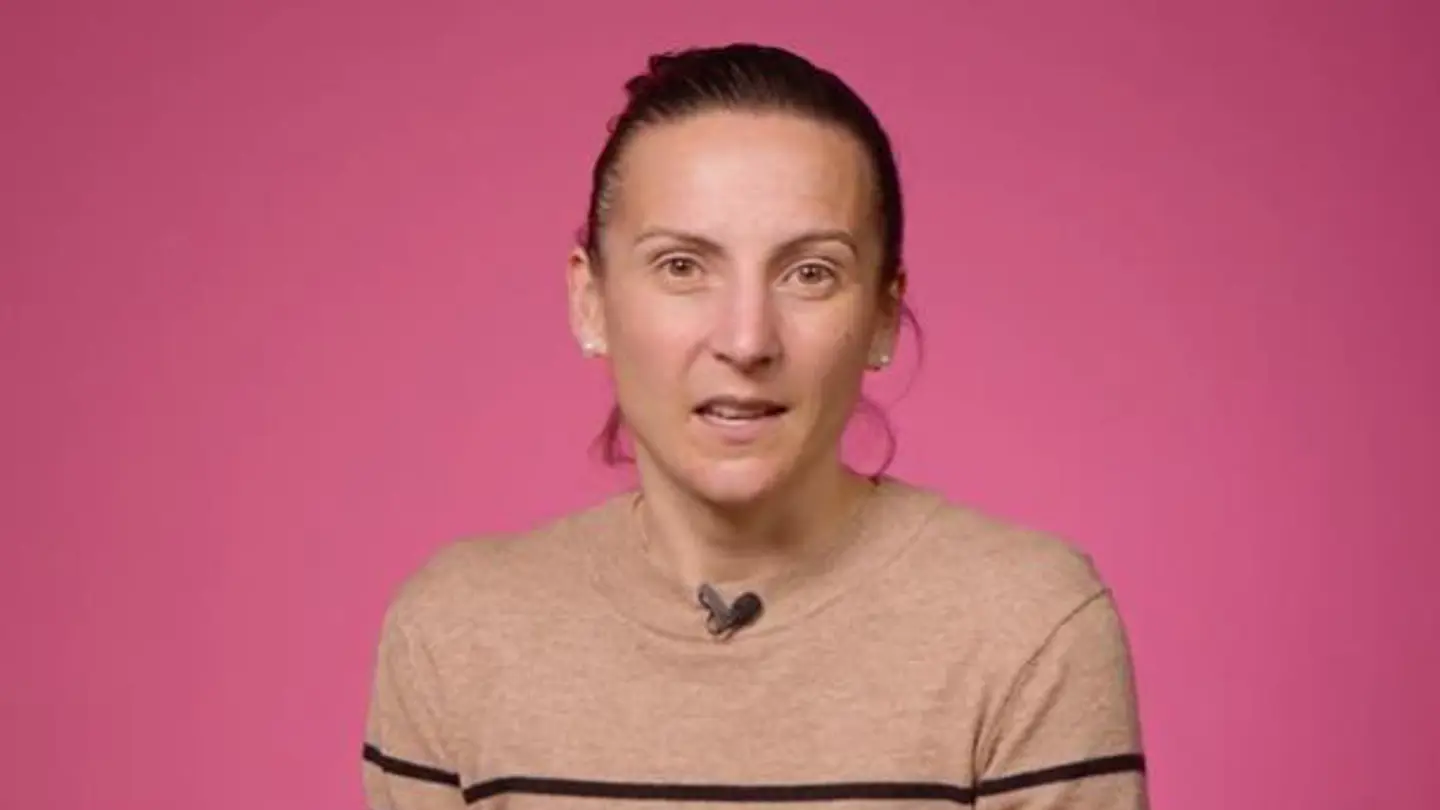

Hello, my name is Dr Anne Baker and I'm a lecturer in Occupational Therapy at Federation Uni on the Gippsland campus in Churchill. One thing I really love about teaching here is that we have small class sizes so that I get to really know my students and it means I can work with them to work on their personal learning goals and to help support them to become occupational therapists. An interesting thing about studying here is that we have brand new facilities that were developed in 2020 when the program first started, and we have a great teaching space which includes up-to-date equipment and assessment. So students are really getting the most relevant skills. And as they work to become occupational therapists, we also have excellent relationships with our clinical partners. So students get a great range of placement experiences and develop their skills in a range of different areas. A fun fact about me is that I'm also an occupational therapy driver assessor, which means that I can assess, make recommendations about people's fitness to drive. This is typically not an area that people think about when they think about occupational therapy, but occupation is more than just your job, so it includes things like self-care, so things like sharing and dressing, productive occupations, which does include work, and also things like driving, as well as leisure occupations, which are things that people do to occupy their time and their space. So this means as occupational therapists, we work from early on in people's lives, so pretty soon after birth, all the way through to advanced age and conditions that involve dying. We'd love you to come and study occupational therapy with us. We have a really great teaching team here, fantastic resources and I think you'll enjoy the student experience.
Course essentials
English requirements
Academic IELTS of 6.5 overall with no band less than 6.0; or equivalent
Entry requirements
Credit
A full-time study load is 120 credits a year (usually four 15-credit units each semester). 120 credits equal one equivalent full-time student load (EFTSL). Each credit point equals about 10 hours of learning, so a 15-credit unit means roughly 150 hours.
Duration
Start dates
Locations
Camp St (on campus)
Gippsland (on campus)
Mt Helen (on campus)
Course overview
The Doctor of Philosophy (PhD) is an elite higher degree qualification completed solely by research. Graduates at this level will have systemic and critical understanding of a substantial and complex body of knowledge at the frontier of a discipline or area of professional practice. Undertaken over four years of full-time study, the PhD enables a candidate to create authoritative capabilities for independent research, demonstrated through the completion of a substantial thesis, or creative works with exegesis. Throughout their research journey, the candidate works closely with a supervisory team who provide academic guidance and support. Candidates in this course would undertake a research project within the broad areas of nursing and allied health.
IT requirements
To do this course you’ll need a fast and reliable computer and access to high-speed internet. Expect to use about 5GB of data per month for every unit you’re doing. Find out more about the minimum IT requirements for studying with us.
Got questions?
Call us on 1800 333 864, start a live chat or submit an enquiry.
Student support
The support we offer is second to none. Need academic help? No problem. Extra access or financial assistance? Let’s see what we can do. View our student services.
The fine print
The commencement of all courses is subject to available funding and enrolment quotas.
Everything in this course overview is correct at the time of being published. However, the University reserves the right to alter any course, procedure or fee. Please check for changes before you apply or enrol.
Federation University uses Victorian and Commonwealth Government funding (for eligible students) to deliver training.
School department
Graduate Research School
Course co-ordinator
Andrew Barton
Career paths
The course creates opportunities for advanced and independent professional practice in careers that entail complex research and in a variety of academic, industry, community and government settings.
Fees and scholarships
Tuition fee information
The indicative fee above is based on a typical first-year enrolment for this course and should be used as a guide only. Your fee will depend on the time it takes to complete your course and any approved credit you receive.
How it’s calculated
The amount is based on the course annual fee for 1 EFTSL (120 credit points). For 0.5 EFTSL (60 credit point) courses, the certificate fee is displayed.
Scholarships
There’s a range of scholarships and grants available. Find out what you can apply for.
Course details
Start dates
Anytime during the year (2027)
Locations
Berwick (on campus)
Camp St (on campus)
Gippsland (on campus)
Mt Helen (on campus)
Information
- Our Mt Helen, SMB, Camp St and Gillies St campuses are located in Ballarat.
Contact hours
Expect to put in at least 38 hours per week (full time) or 19 hours per week (part time).
Elective
Elective
Elective
Elective
Elective
Elective
Elective
Elective
Elective
Elective
Elective
Elective
Elective
Entry requirements
To be eligible for admission as a candidate for the degree of Doctor of Philosophy an applicant must:
- possess a degree that is the equivalent to an AQF Bachelor degree with Honours with first class or second class, first division, for entry to a PhD or at least third class honours for entry to a Masters by Research, or
- possess a Masters degree with a relevant research component that is equivalent to a Masters degree from Federation University and an equivalent result as outlined above, or
- submit other evidence of relevant qualifications and experience, or research experience, to confirm that the applicant possesses a level of relevant research experience and capacity equivalent to an award in either point above, and
- satisfy such additional requirements for admission to a PhD candidature, if any, as may be prescribed by the Graduate Research School Board
English language requirements
Academic IELTS of 6.5 overall with no band less than 6.0; or equivalent
If you’re an international student currently studying VCE in Australia, apply through VTAC. If not, find out how to apply directly to Federation University.
If you’re applying for a higher degree by research, make sure you follow these instructions.
Ready to fill out your application? You might need these codes:
- Direct application
- Yes
- Federation University code
- HE0
- CRICOS code
- 119305F
Hear from our staff
Hello, my name is Dr Anne Baker and I'm a lecturer in Occupational Therapy at Federation Uni on the Gippsland campus in Churchill. One thing I really love about teaching here is that we have small class sizes so that I get to really know my students and it means I can work with them to work on their personal learning goals and to help support them to become occupational therapists. An interesting thing about studying here is that we have brand new facilities that were developed in 2020 when the program first started, and we have a great teaching space which includes up-to-date equipment and assessment. So students are really getting the most relevant skills. And as they work to become occupational therapists, we also have excellent relationships with our clinical partners. So students get a great range of placement experiences and develop their skills in a range of different areas. A fun fact about me is that I'm also an occupational therapy driver assessor, which means that I can assess, make recommendations about people's fitness to drive. This is typically not an area that people think about when they think about occupational therapy, but occupation is more than just your job, so it includes things like self-care, so things like sharing and dressing, productive occupations, which does include work, and also things like driving, as well as leisure occupations, which are things that people do to occupy their time and their space. So this means as occupational therapists, we work from early on in people's lives, so pretty soon after birth, all the way through to advanced age and conditions that involve dying. We'd love you to come and study occupational therapy with us. We have a really great teaching team here, fantastic resources and I think you'll enjoy the student experience.