
Australian-first medicinal cannabis qualification takes root
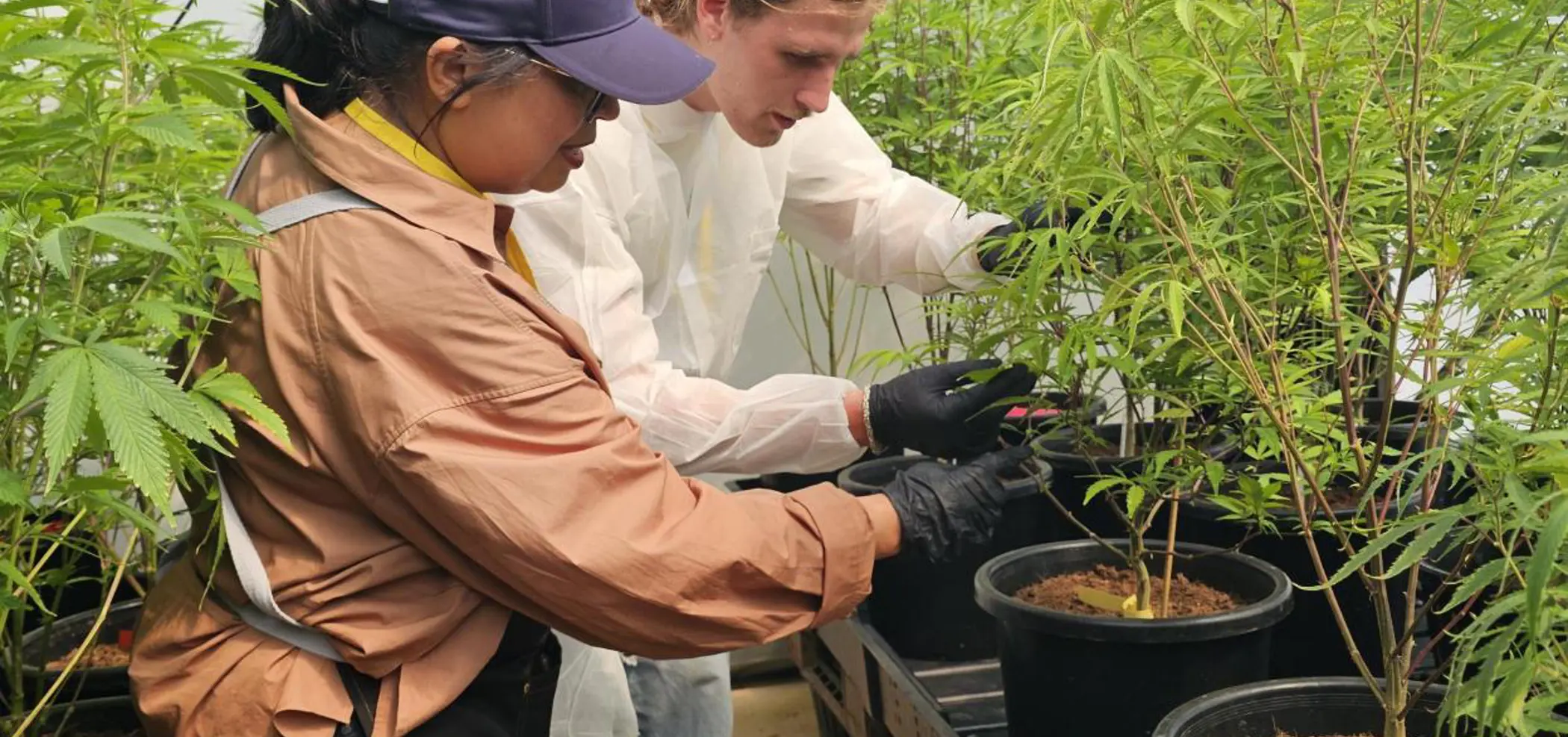
Certificate III Medicinal Cannabis Cultivation and Production students Jacqui Fernandez and Isaiah Stanley
Federation TAFE has launched Australia’s first nationally recognised qualification in medicinal cannabis cultivation and production, helping build the skilled workforce required by the country’s rapidly growing industry.
The inaugural cohort of 10 students from across Australia has commenced the Certificate III in Medicinal Cannabis Cultivation and Production, becoming the first students in the country to undertake the qualification.
The course combines online study with hands-on training through Federation TAFE’s partnership with licensed medicinal cannabis producer Cannai in Victoria’s Yarra Valley.
Students will train in a working commercial environment at Cannai, gaining experience across greenhouse cultivation, propagation and post-harvest operations.
The qualification prepares students for roles including cultivation technicians, with training covering rigorous compliance, quality assurance, biosecurity, workplace safety and regulated production processes.
Federation TAFE is currently the only registered training organisation approved to deliver and assess the qualification, which was developed in response to identified skills and workforce needs within the growing medicinal cannabis industry.
Modelling of the Victorian industry estimates demand will grow to almost 242,000 medicinal cannabis patients by 2028, with Victoria expected to supply between 30 and 50 per cent of medicinal cannabis products nationally.
The pilot was supported by $1.6 million through the Victorian Government’s Workforce Training Innovation Fund, helping remove financial barriers for the inaugural cohort.
The first cohort brings together participants from a range of backgrounds, including early-career entrants and experienced medicinal cannabis, horticulture and science professionals. The cohort also includes participants with advanced academic and research experience.
Places in the pilot were highly sought after, with applicants undergoing a comprehensive selection process, including multiple rounds of assessment and interview, ensuring students are well placed to succeed in this pioneering qualification.
Medicinal cannabis was legalised in Australia in 2016, with the sector developing into a highly regulated agricultural, horticultural and pharmaceutical supply industry.
As Australia’s medicinal cannabis sector continues to grow, the need for workers with specialised cultivation, production and regulatory skills is also increasing.
Federation TAFE’s new qualification responds to this demand by creating a nationally recognised training pathway into the industry.
Quotes attributable to Federation University Vice-Chancellor and President, Professor Duncan Bentley
“Medicinal cannabis is a highly regulated industry that requires people with specialist skills and knowledge. Federation is proud to be leading the way with Australia’s first nationally recognised training of its kind.”
“This is what vocational education should do – anticipate where jobs are emerging and give people the skills to step into them.”
Quotes attributable to Federation TAFE Pro-Vice Chancellor VET and Pathways and Chief Executive, Darren Gray
“This is not training that can be delivered from a textbook alone. Students are learning in a working commercial facility and gaining first-hand experience of the standards, processes and practices required in this highly regulated industry.”
“Our first cohort reflects the breadth of people this growing industry is attracting, from those starting their careers to experienced professionals and people with backgrounds in horticulture, science and research.”
Quotes attributable to Medicinal Cannabis Certificate III student, Isaiah Stanley
"This course gives us as students a clear pathway into the industry and the confidence that we're building the skills employers actually need. It’s exciting to be part of something that’s helping fill a genuine skills gap."
“I’ve always had a passion for horticulture, so being able to turn that into a career in an industry that can make a real difference in people’s lives is really meaningful.”