
Researchers unlock new insights into Lake Colac’s ecosystem
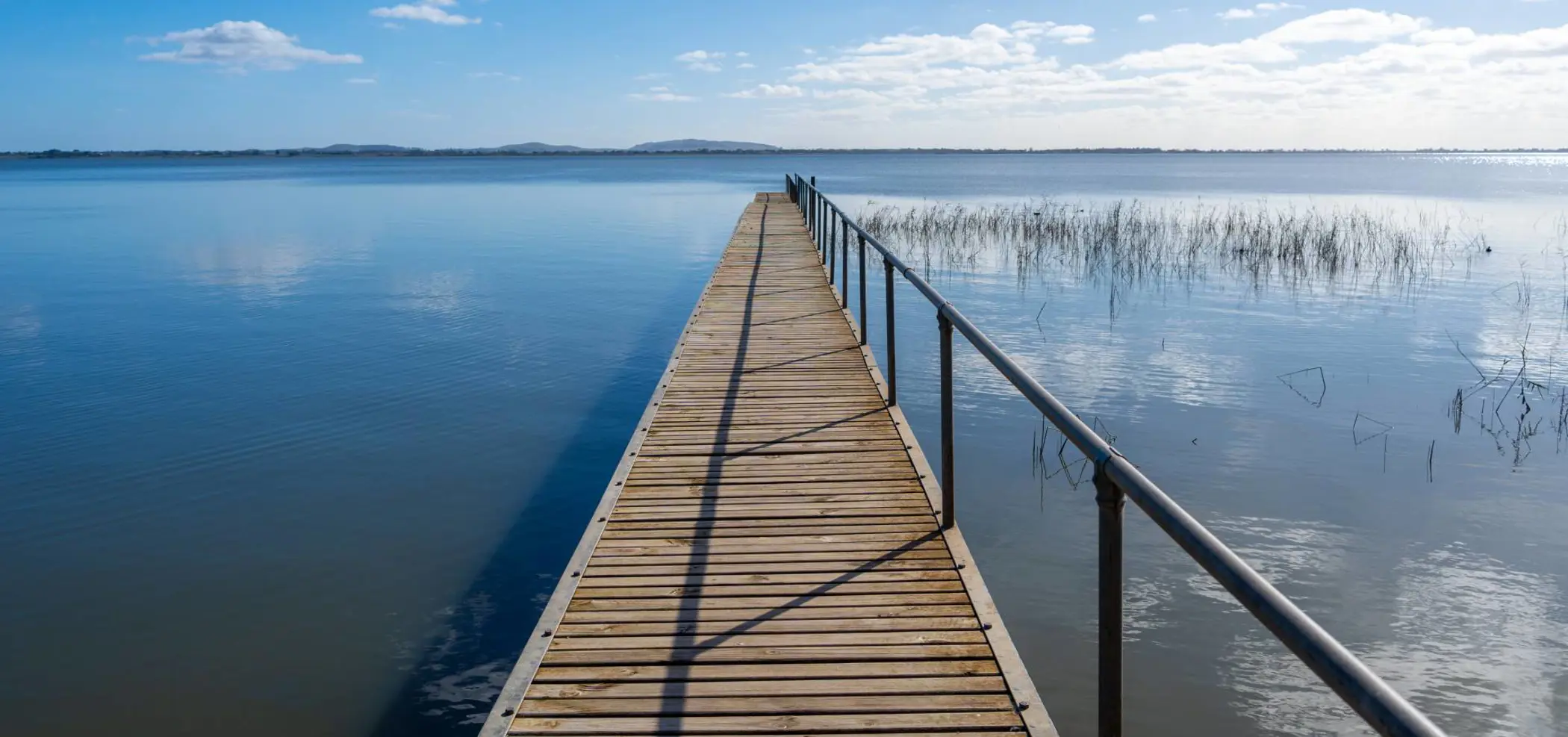
Research is underway to better understand and protect Lake Colac's health. Image: daboost — stock.adobe.com
As the largest natural freshwater lake in Victoria, Lake Colac draws anglers to its shores, birdwatchers to its wetlands and families to one of western Victoria's most valued outdoor destinations.
The lake plays an important role in the local environment and community. Its unique characteristics, including having no natural outflow, also make it an ideal site for studying how nutrients and other substances move through freshwater systems.
Beyond recreation and tourism, research is underway to better understand and protect the waterway's health.
A research team led by Federation University, in collaboration with Deakin University, Barwon Water and the Victorian EPA, has assessed how pharmaceuticals move through a lake food web.
Federation University Chemistry Senior Lecturer Dr Benjamin Long said the project was designed to better understand how trace substances move through regional freshwater environments, including what happens in a lake system with no natural outflow.
"Lake Colac is a unique system and an ideal place to investigate how these substances move through water, plants and animals over time," Dr Long said.
"While we detected several pharmaceuticals in the lake, the concentrations were very low, and all posed a low human health and ecological risk. The results are reassuring for the community and provide a benchmark for future monitoring."
The project included a study of tramadol, a commonly used opioid painkiller. Tramadol and other pharmaceuticals can enter the environment through human and animal use, either via improper disposal of unused medications or through normal excretion after use, eventually reaching the lake through runoff or the discharge of recycled water from the Colac Water Reclamation Plant.
The study found seven of the eight pharmaceuticals investigated were present in lake water at very low concentrations.
Researchers also discovered that shoreline vegetation, including reeds and algae, absorb and retain pharmaceuticals, potentially acting as both a way that pharmaceuticals are removed from the water but also an extra route of exposure to herbivorous species.
The project included a citizen science component, with a ‘Fishing for Facts’ Day, when community members helped researchers capture invasive European carp for analysis. The carp and other species captured by researchers, such as insects, orb-weaver spiders, shrimp, and galaxiids contributed to a better understanding of the lake's food web and ecological connections.
The data from this analysis showed no evidence of pharmaceuticals building up through the food chain.
"This study provides some of the first Australian data on how pharmaceuticals move through a freshwater lake and what happens to them once they enter the environment," Dr Long said.
"One of the most encouraging findings from this analysis was that we found no evidence of pharmaceuticals building up through the food chain.
"The research gives water managers, regulators and the community a stronger evidence base for understanding and protecting important waterways of Australia such as Lake Colac."
The full study is available open access at The Journal of Hazardous Materials.