
Studying nursing in Australia: Kirstann’s story

When he’s not busy studying nursing, Kirstann enjoys exploring everything Victoria has to offer. Brighton Beach’s iconic bathing boxes were one of the stops along the way, adding a little colour to his adventures in Australia.
Finding his voice far from home
A student can cross thousands of kilometres and still find that the hardest distance to cover is the one between staying silent and speaking up.
During his first week at Federation University, Kirstann rarely said much.
He had moved from the Philippines to regional Victoria to study the Bachelor of Nursing at the Gippsland Campus. The move brought the opportunity he had worked towards, but it also placed him in a new country, a different education system and a classroom where he did not yet know anyone.
“I was just a silent kid,” he said.
Kirstann listened during lectures and began learning the routines of university life. In nursing labs, he worked alongside his classmates while becoming familiar with the practical side of the course.
Then, gradually, he began to contribute.
A question in class led to another. He became more comfortable sharing his ideas and working with other students. As the semester unfolded, Kirstann noticed a change he could not have imagined during that quiet first week.
“I developed my personal skills and started speaking up more in my lectures and labs,” he said. “I started to become one of the leaders in my class.”
For Kirstann, confidence did not come from suddenly having every answer. It grew because he felt comfortable enough to participate while he was still learning.
Looking for somewhere he would be known
The possibility of studying in Australia began as a suggestion from Kirstann’s parents.
Once he decided to pursue nursing, he contacted an education agent in the Philippines and began comparing universities. He looked at courses, locations and the experience available to international students.
But one question kept returning: would he feel as though he belonged there?
“I wasn’t looking for just a university,” he said. “I was looking for a place where I felt involved and not like another number.”
Federation University’s smaller classes and Gippsland location appealed to him. Moving overseas already felt like a major adjustment, and beginning in a close campus community seemed less overwhelming than immediately settling into a large city.
Even after choosing Federation, reaching the classroom took persistence.
Kirstann learnt that he would need to complete one year of bachelor-level study in the Philippines before he could receive direct admission to the Bachelor of Nursing. The course he wanted was suddenly further away.
During that period, Federation staff helped him understand the requirements, the options available and what he needed to do next.
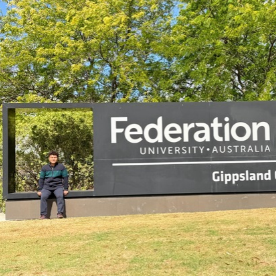
Kirstann completed the required study and continued with his application. Several months later, the plan discussed with his family in the Philippines became real.
He arrived in Gippsland as a Bachelor of Nursing student.
“All that hard work paid off,” he said.
Discovering that asking for help is part of learning
Arriving on campus brought a new set of challenges.
Kirstann had to adjust to Australian academic expectations while finding his way around an unfamiliar place. Questions that might have felt simple at home could seem much bigger when everything around him was new.
“I thought making this big step would be really nerve-racking,” he said.
What reassured him was discovering that he did not need to work everything out alone.
When Kirstann was confused by parts of his coursework, Learning Skills Advisers in the library helped him understand the material. His lecturers also offered one-on-one meetings, giving him space to ask questions he might not have raised in front of the class.
“They helped me with lessons I was confused about,” he said. “It was a huge step for me, but Federation made it an easier step.”
Those conversations helped with his studies, but their effect went further.
Each time Kirstann asked a question and received a useful answer, he became more comfortable asking the next one. Support helped him understand that uncertainty was a normal part of university study, rather than evidence that he did not belong.
The student who had been hesitant to speak began finding his place in the room.
Building a community in Gippsland
Kirstann deliberately chose to study outside a capital city.
He wanted somewhere that would give him room to adjust to life in Australia without adding the intensity of a large city to an already significant move.
“It’s more laid-back compared to universities in the cities,” he said. “Especially if you’re a new student, you don’t want to be overwhelmed.”
At the Gippsland Campus, some of Kirstann’s classmates live in the surrounding area. Studying together has made it easier to stay focused while giving him connections beyond scheduled lectures and labs.
Those relationships have helped an unfamiliar place begin to feel comfortable.
For Kirstann, studying in regional Australia is not simply about living somewhere quieter. It has given him the chance to recognise familiar faces, learn alongside people he knows and experience Australian culture as part of a local community.
Feeling connected outside class has changed how he behaves inside it. As Kirstann became more comfortable around his peers, he became more willing to contribute, collaborate and step forward.
The close community he hoped to find while researching universities was beginning to take shape around him.
Taking nursing beyond the lab
Kirstann is still at the beginning of his degree.
He is building foundational knowledge through lectures and developing practical skills in nursing labs. There is still much to learn before he can care for patients with the judgement and confidence expected of a registered nurse.
That is why he is looking forward to clinical placement.
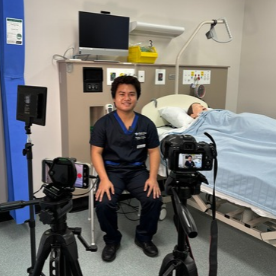
Placement will allow Kirstann to see how the different parts of nursing come together. Clinical knowledge matters, but so do communication, teamwork and the ability to respond when a patient may be unwell or frightened.
He will be able to observe experienced healthcare professionals, work with patients and begin understanding the responsibilities that come with the role.
For Kirstann, placement represents the point where nursing begins to feel less like a subject he is studying and closer to the work he hopes to do.
An opportunity that makes placement feel real
Kirstann has another reason to be excited about the experience ahead.
He is one of the students selected to receive Federation University’s paid placement guarantee.
“I was lucky enough to be one of the recipients,” he said. “I’m lucky to have that opportunity.”
For a student building a life in a new country, being paid during placement can ease some of the financial pressure that comes with spending time away from regular work. It also gives Kirstann the chance to focus on developing his skills while gaining experience in a professional healthcare setting.
More personally, the opportunity gives shape to what he is working towards.
The lessons, nursing labs and questions asked after class are preparing him for a place where his decisions will affect real people. The placement guarantee makes that next stage feel tangible.
Kirstann knows he will still encounter unfamiliar situations. He will need to listen, ask for guidance and keep learning.
But unfamiliar situations no longer feel quite as daunting as they did when he first arrived.
Seeing how far he has already come
Kirstann does not claim to have his future completely mapped out.
He is a first-year student who is still discovering what nursing will ask of him and which areas of healthcare may interest him most. His clinical experience is still ahead.
That makes the change he has already experienced feel genuine.
He arrived in Australia unsure how he would adjust. He entered his first week of classes quietly and wondered whether he would feel overwhelmed.
Now, he contributes during lectures, speaks up in nursing labs and takes on leadership responsibilities alongside his classmates.
The course has not suddenly become easy, and Kirstann has not stopped needing help. What has changed is his confidence that he can find an answer, learn from the people around him and take the next step.
He chose Federation University because he wanted to feel involved rather than anonymous.
One semester in, Kirstann is no longer waiting to find his place. He is beginning to create it.
And he also appreciates how much his family’s support has meant throughout his journey. “Behind every big leap is a strong support system. For me, that’s my family”, he said.
Explore the Bachelor of Nursing
Kirstann’s experience shows what the beginning of a nursing degree can really involve: unfamiliar challenges, practical skills to develop and small moments that gradually build confidence. Through the Bachelor of Nursing at Federation University, students learn in nursing labs before applying their knowledge during clinical placements. If Kirstann’s experience sounds like the kind of university environment you are looking for, explore the Bachelor of Nursing and see where studying nursing at Federation could take you.
Frequently Asked Questions
Studying a Bachelor of Nursing in Australia combines academic learning with practical experience in healthcare settings. Students develop clinical knowledge, communication skills and confidence through nursing labs and placements. For international students like Kirstann, it can also be an opportunity to learn within the Australian healthcare system while building connections with classmates, lecturers and the wider community.
Federation University’s Bachelor of Nursing combines lectures, practical nursing labs and clinical placements. Students begin developing the knowledge and skills needed to care for patients while learning how nurses work within healthcare teams. Kirstann’s experience also shows the value of smaller classes, approachable lecturers and being able to ask for individual help while adjusting to university study.
Yes. Clinical placements give Bachelor of Nursing students the opportunity to apply what they have learnt in lectures and nursing labs within professional healthcare settings. Students can observe experienced practitioners, communicate with patients and see how healthcare teams work together. Kirstann is looking forward to placement because it will bring his learning closer to the work he hopes to do after graduating.
Eligible students may have access to Federation University’s paid placement guarantee scholarship. Kirstann was selected as a recipient, giving him the opportunity to gain professional experience while receiving financial support. For students who may need to reduce their regular paid work during placement, this support can make the experience easier to manage and allow them to focus more fully on developing their nursing skills.
International nursing students can access academic, wellbeing and practical support while adjusting to study and life in Australia. Learning Skills Advisers can assist with academic writing, study skills, referencing and assignments, while lecturers may also provide individual guidance. When Kirstann found parts of his coursework confusing, meeting with advisers and lecturers helped him understand the material and feel more confident participating in class. Federation’s study support services are on hand to help you strengthen your academic skills and navigate your studies with confidence.
Federation University’s Gippsland Campus offers a quieter study environment within a close community. Kirstann chose Gippsland because he wanted somewhere that would feel manageable while he adjusted to living in Australia. Studying alongside classmates who live nearby has helped him form connections, remain focused on his course and feel comfortable enough to speak up during lectures and practical nursing classes.
After completing an accredited Bachelor of Nursing and meeting professional registration requirements, graduates may pursue registered nursing roles in hospitals, aged care, mental health, community health and other healthcare settings. Clinical placements can introduce students to different types of nursing and help them consider where their interests lie. Further experience, specialised training or postgraduate study can open additional career opportunities.
Nursing may suit you if you are interested in health, enjoy practical learning and want work that involves supporting people during important moments in their lives. It requires responsibility, teamwork, resilience and a willingness to keep learning. You do not need to begin university feeling completely confident. Like Kirstann, you can build confidence gradually through practice, feedback and asking for help when you need it.