
How scholarships, placements and regional Australia helped me build a nursing career

Moving from Sri Lanka to study nursing in Ballarat, Australia was a big step for Rajindu. "I did research on Ballarat before coming here," he says. "It's a small city and I love the quiet and peaceful environment. Studying here is really affordable and the living costs are low as well."
Some career decisions begin with comparing university rankings.
Rajindu's began much earlier, watching his mum care for patients in Sri Lanka.
As a doctor, she showed him that healthcare wasn't simply about science. It was about compassion, responsibility and being there for people when they needed it most. Those moments stayed with him, shaping an ambition that would eventually take him thousands of kilometres from home to study the Bachelor of Nursing at Federation University Australia.
"I've always loved science," Rajindu says.
"My mum was my main inspiration. Becoming a registered nurse is my goal, and maybe one day it could even lead me towards my childhood dream of becoming a doctor."
Leaving home to study nursing in Australia wasn't a decision he made lightly.
Like many international students, he spent months weighing up his options, comparing universities, researching Australian cities and asking practical questions about affordability, student support and future career opportunities.
Could he afford to study overseas?
Would he receive enough individual support to succeed?
Would the degree prepare him for a career in healthcare, not just graduation?
Those questions kept leading him back to Federation University.
"My main considerations were affordability and how well the course was structured," he says.
"When I looked at Federation University, I saw smaller classes and lecturers who really supported individual students. I found that really beneficial."
Financial support also played an important role in making Australia feel within reach.
After accepting his offer, Rajindu received a 25 per cent international student scholarship, followed by accommodation support that helped reduce the financial pressure of relocating overseas.
Rather than worrying about whether studying abroad was achievable, he could focus on settling into university life and building the future he had imagined.
Today, that future feels much closer.
Most weeks, you'll find him moving between classes at Federation's Mt Helen Campus and the wards of St John of God Ballarat Hospital, where he's completing a nursing fellowship that has transformed the way he thinks about patient care.
It's where the theories discussed in lectures become conversations with patients, decisions made alongside experienced clinicians and practical lessons that simply can't be taught in a classroom.
Learning in the place where nurses become nurses
Every nursing student expects clinical placements.
For Rajindu, one opportunity has made those experiences even more valuable.
Through Federation University's partnership with St John of God Ballarat Hospital, he's been able to complete a fellowship that offers something many students rarely experience: continuity.
Instead of regularly moving between different healthcare settings, he's been able to remain in the same hospital environment, build relationships with clinical staff and gradually grow in confidence as each placement builds on the last.

"It develops my compassion and empathy, and it's been really valuable," he says.
The fellowship has also brought practical advantages.
Remaining at the same hospital has saved him from relocating for different placements, reducing both travel costs and the disruption that many students experience throughout their degree. For an international student building a new life in Australia, that consistency has allowed him to focus on what matters most: becoming the best nurse he can be.
He credits Federation's Clinical Placements Team with encouraging students to apply for opportunities they may not have considered on their own.
"The clinical placements team have been really helpful and encouraged students to apply for the fellowship program," he says.
Each shift reinforces something he first learnt watching his mum years ago.
Healthcare is built on knowledge, but it's equally built on empathy, communication and trust.
Those are qualities that grow through experience, one patient and one conversation at a time.
Back on campus, that preparation extends well beyond clinical skills.
Dedicated career development units help students prepare professional résumés, practise interview techniques and build the confidence needed to enter Australia's healthcare workforce after graduation.
Rather than waiting until the end of his degree to think about employment, Rajindu has been developing those professional skills alongside his clinical experience.
"We have units that teach us how to prepare for interviews, write a professional CV and cover letter and get ready for the real workforce," he says.
With every placement, every patient interaction and every new challenge, the future he imagined back in Sri Lanka feels increasingly within reach.
Finding confidence in regional Australia
Before moving to Australia, Rajindu spent plenty of time researching where he wanted to study.
Like many international students, he could have chosen one of Australia's largest cities. Instead, he found himself drawn somewhere quieter.
Ballarat.
"I did research on Ballarat before coming here," he says.
"I liked that it was a small city and I love the quiet and peaceful environment."
What appealed to him before he arrived has become one of the things he values most today.
Without long commutes or the pace of a major city, he has been able to focus on his studies, make meaningful connections and enjoy a lifestyle that feels balanced. Living in regional Victoria has also made managing everyday expenses more achievable, something he says has made a real difference as an international student.
"It's really affordable and the living costs are low," he says.
"As a student, studying in a regional area is really valuable because it's cost-effective."
For Rajindu, though, affordability has only been part of the experience.
What has surprised him most is the sense of community.
"The community has been really fantastic," he says.
"The staff and lecturers have been really supportive throughout every step of the way."
That support extends well beyond the classroom.
When Rajindu first arrived from Sri Lanka, almost everything was unfamiliar. New systems, a new education system and life in a different country could easily have felt overwhelming.
Instead, he found people ready to help.
"As an international student coming from Sri Lanka, I was completely blank," he says.
"The International Student Advisory team guided me every step of the way."
Whether he needed practical advice, answers to everyday questions or reassurance during moments of homesickness, he always knew there was someone to turn to.
"If you have any burning questions, they're here to help," he says.
"And if you feel homesick, we have mental health support. There are also lots of international student programs and social clubs, which I found really helpful when settling into Australia."
Those early connections helped transform an unfamiliar campus into somewhere he genuinely felt he belonged.
Friendships soon became another important part of university life.
Rather than studying alone, Rajindu and his classmates regularly meet in Federation's learning spaces to prepare for assessments, discuss placement experiences and support one another through the challenges of a nursing degree.
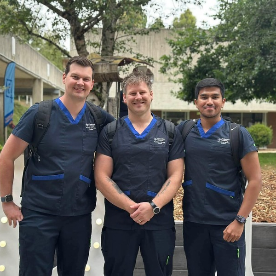
Those conversations often continue long after classes finish.
Sometimes they're about anatomy or upcoming clinical placements. Other times they're simply about adjusting to life in Australia, sharing experiences and celebrating small wins together.
For Rajindu, those friendships have become just as valuable as the lessons he's learnt in lectures.
Looking back, he sees much more than the student who left Sri Lanka hoping to build a career in healthcare.
He sees someone who has grown in confidence, learnt to care for patients in real hospital settings and found a community that has supported him every step of the way.
His advice for anyone considering the same path is simple.
"Don't be afraid," he says.
"You've got the courage.
"Think about your future and your career. Do it for yourself."
For Rajindu, the biggest step wasn't moving to Australia.
It was trusting himself enough to believe he belonged here.
And with every shift at St John of God Ballarat Hospital, every new skill he develops and every patient he cares for, he's becoming the kind of healthcare professional who first inspired him all those years ago by watching his mum make a difference in other people's lives.
Start your career in healthcare
If you're considering studying the Bachelor of Nursing, Rajindu's experience shows how the right combination of practical learning, personalised support and regional living can help you build confidence for a career in healthcare. From clinical placements and fellowship opportunities to scholarships and dedicated support for international students, Federation University offers opportunities to develop both professionally and personally. Explore the Bachelor of Nursing to discover where studying in regional Victoria could take you and see how your own career in healthcare could begin.
Frequently Asked Questions
For Rajindu, the answer has been yes. He chose Federation University because of its affordable tuition, smaller class sizes and supportive learning environment. After arriving from Sri Lanka, he also received guidance from the International Student Advisory team, accessed wellbeing support when needed and built friendships through social clubs and collaborative learning spaces. His experience shows that studying nursing is about more than academic success. Feeling supported both inside and outside the classroom can make settling into Australia much easier.
Clinical placements give students the opportunity to apply what they learn in class in real healthcare settings. Rajindu says his placements have helped him build clinical skills, communicate with patients and develop compassion and confidence. Through a fellowship at St John of God Ballarat Hospital, he has also benefited from staying in one hospital environment, allowing him to build stronger relationships with clinicians and gain continuity throughout his placement experience.
A Bachelor of Nursing prepares graduates to become registered nurses working across hospitals, aged care, community health, rehabilitation, mental health and many other healthcare settings. For Rajindu, becoming a registered nurse is the next step towards a lifelong career in healthcare, while also keeping open the possibility of pursuing his childhood ambition of studying medicine in the future. The degree also helps students prepare for employment through career-focused learning, including interview preparation and professional résumé writing.
Many students automatically look towards Australia's largest cities, but regional Victoria offers a different university experience. Rajindu says Ballarat appealed to him because of its peaceful environment, lower living costs and welcoming community. Studying in a regional city has allowed him to focus on his studies without the higher accommodation costs and longer travel times often associated with larger metropolitan areas. For many international students, this balance can make university life both more affordable and less stressful.
Scholarships can make studying overseas more financially achievable. Rajindu received a 25 per cent international student scholarship, as well as accommodation support, which helped reduce the cost of relocating from Sri Lanka to Australia. While scholarship eligibility varies depending on the student and intake, financial assistance can help students focus more on their studies and less on the financial pressures of moving overseas. Prospective students should always check the latest scholarship opportunities available before applying.
Preparing for employment starts well before graduation. Alongside practical placements, Rajindu completed career development units that taught him how to prepare for interviews, write a professional CV and develop a strong cover letter. Combined with clinical experience and industry partnerships, these opportunities help students graduate with practical skills and greater confidence as they enter Australia's healthcare workforce.
Moving to another country involves much more than starting a degree. Federation University provides support through its International Student Advisory team, wellbeing services and opportunities to connect through clubs and student activities. Rajindu says these services helped answer practical questions, supported him through the transition to life in Australia and made it easier to build friendships and feel part of the university community.
Rajindu compared several universities before deciding where to study. He was looking for a nursing degree that combined affordability, strong practical learning and personalised support. Federation University's smaller classes, supportive lecturers, scholarship opportunities and industry partnerships stood out during his research. Looking back, he believes those factors helped him develop the confidence, experience and professional skills needed to move closer to becoming a registered nurse.