
How an IT placement helped Abdullah discover the career he wanted
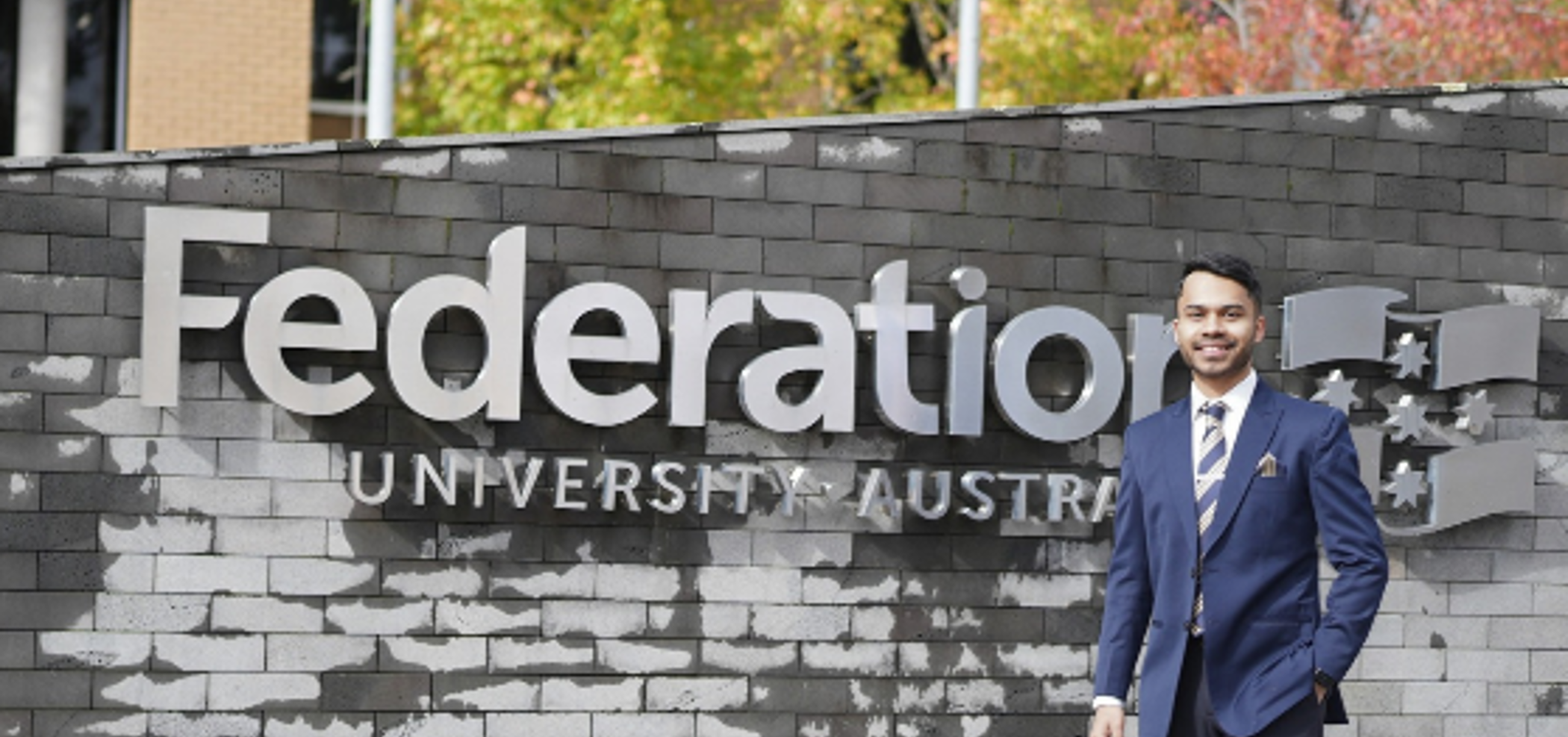
Sometimes the most valuable thing you learn at university isn't finding what you're good at.
It's about finding the right fit.
When Abdullah first imagined his future in technology, he pictured himself working behind the scenes, solving complex technical problems and building systems. Like many students beginning an information technology degree, he assumed there was a clear path from university into a technical IT role.
A year working in industry changed that assumption completely.
By the time he graduated from Federation University Australia's Bachelor of Information Technology (Professional Practice), Abdullah hadn't lost his enthusiasm for technology. Instead, he'd discovered that his strengths lay somewhere else entirely. Today, he works as a graduate consultant, helping organisations solve business challenges through technology rather than building the technology itself.
"If I hadn't done the Co-operative placement, who knows?" he says. "I might have chosen a technical pathway and then after two years I would've been crying."
It's a light-hearted remark, but it captures something many future university students quietly worry about.
What if I choose the wrong career?
For Abdullah, the answer didn't come from another lecture or textbook. It came from spending a year working alongside experienced professionals before he graduated, giving him the chance to test his assumptions in a real workplace before making decisions that could shape the rest of his career.
Looking for more than another IT degree
Abdullah didn't originally plan to study at Federation University.
After beginning his studies at another university in Melbourne, he started looking for a course that would give him more than classroom learning. While researching his options, he came across the Bachelor of Information Technology (Professional Practice), a degree that combines university study with an extended industry placement, through Federation’s Co-operative Education Model.
The Professional Practice program is something Federation students can work towards once they've started their IT studies. With places limited, eligible students like Abdullah are invited to apply after completing their first year of any Bachelor of Information Technology stream.
"The main reason I moved to Federation was because of the Bachelor of IT Professional Practice Program," he says. "It was one of a kind."
For Abdullah, that opportunity stood out because it offered something he couldn't easily find elsewhere. Rather than waiting until graduation to experience the workplace, he could build professional experience while completing his degree.
Transferring universities also brought an unexpected change.
Coming from a much larger institution, he noticed how quickly he became part of the Federation community.
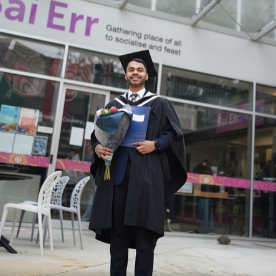
That feeling wasn't created by one moment. It grew through everyday interactions with lecturers who knew his name, course staff who responded when he reached out, and a campus environment where he felt comfortable asking questions.
Looking back, Abdullah believes those relationships became just as important as the course itself.
Learning that asking for help is a strength
Starting university in a new country means learning much more than course content.
Alongside lectures and assignments comes the challenge of settling into a new city, understanding a different education system and building a support network from scratch.
After transferring to Federation University, Abdullah attended international orientation, discovered practical services available on campus and found support with everything from student discounts to finding part-time work. More importantly, he felt that his opinions mattered.
"I felt like I was heard every time I put out an opinion," he says.
That sense of belonging continued in the classroom.
Throughout his degree, Abdullah developed strong relationships with his lecturers and course coordinator, knowing he could ask for help whenever he needed it. Sometimes that meant sending a message on Microsoft Teams only hours before an assignment was due.
"I felt like every time I reached out, I got the support that I wanted," he says.
That experience taught him an important lesson he still carries into his professional life today. Support doesn't always come looking for you, but when you're willing to ask for it, it can make all the difference.
For Abdullah, learning to communicate openly became just as valuable as anything he learnt in class.
Finding the career he didn't know existed
When Abdullah joined Federation University's Bachelor of Information Technology (Professional Practice), he expected the Co-op placement to strengthen his technical skills.
Instead, it completely changed the direction of his career.
Professional placements are valued by students for providing experience prior to graduation. For Abdullah, though, it became something far more worthwhile. It gave him the opportunity to discover where he genuinely belonged in an industry that's far broader than many students imagine.
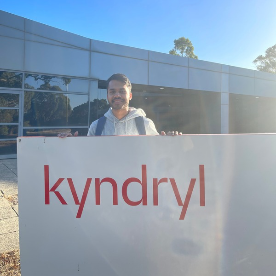
Before beginning his placement, he'd spent two years studying Business Information Systems and was eager to experience the technical side of information technology. Through Federation University's Co-operative model, he joined global technology company Kyndryl for a year-long placement, completing around 1,600 hours working alongside industry professionals on enterprise mainframe systems.
It was exactly the kind of opportunity he'd hoped for.
And it challenged everything he thought he knew about himself.
"I realised that I'm not a technical person," he says.
For some students, that realisation might feel disappointing. For Abdullah, it was liberating.
Rather than discovering he'd chosen the wrong degree, he discovered there were more career paths within technology than he'd ever realised. While he enjoyed working in IT, it became clear his strengths weren't in writing code or managing technical infrastructure. They were in understanding people, solving business problems and connecting technology with strategy.
That clarity is difficult to find in a classroom alone.
Lectures can build knowledge and assignments can test understanding, but spending a year in a professional workplace gives students something different. It allows them to experience the pace, expectations and everyday realities of the industry while there's still time to refine their career direction.
For Abdullah, that meant leaving university with confidence rather than uncertainty.
The placement also helped him develop the professional habits that employers expect but are rarely taught explicitly.
"I can see the impact the last 12 months has had," he says. "Whether it's attending meetings on time or even something as simple as replying to emails."
They're small details, but together they shape how graduates work alongside colleagues, communicate with clients and contribute to professional teams.
Supported by both his workplace manager and his Federation University Co-op counsellor throughout the placement, Abdullah had the opportunity to ask questions, learn from experienced professionals and gradually build confidence in a real workplace.
"The support that I got throughout co-op was really good," he says. "From my counsellor as well as my workplace manager."
By the time he completed his degree, stepping into full-time employment no longer felt like stepping into the unknown.
Just one week after graduating, Abdullah began working as a graduate consultant at a business consultancy firm.
"I definitely felt more job ready after doing my Co-op placement," he says.
Unlike many graduates entering their first professional role, he'd already spent a year learning how workplaces operate. He understood how projects moved forward, how teams collaborated and how technology could be used to solve real business challenges.
More importantly, he wasn't starting a career based on assumptions.
He'd already tested it.
Looking back, that's what Abdullah values most about his placement experience. It didn't simply help him secure a graduate role. It helped him discover the kind of work he genuinely enjoys before making long-term career decisions.
"If I hadn't done the placement, who knows?" he says. "I might have chosen a technical pathway and then after two years I would have been crying."
It's a comment he laughs about now, but it's also a reminder that finding the right career isn't always about getting your first choice right.
Sometimes it's about having the opportunity to discover what fits before your career truly begins.
Looking back with gratitude
Ask Abdullah what advice he'd give future students, and his answer has very little to do with grades.
"The biggest advice I'd probably give is reach out and communicate," he says.
"A lot of the time the support that we need exists, but we don't know if it does."
His own experience is proof of that.
Students are typically invited into the Professional Practice program earlier in their degree, but Abdullah continued checking in with his counsellor every few months, showing he was eager to be part of the program. When a place became available at the end of his second year, she remembered his enthusiasm and invited him to apply.
It's a lesson that's stayed with him well beyond university. Opportunities don't always arrive on their own. Sometimes they begin with a conversation.
Now, whenever Abdullah returns to campus, he finds himself reflecting on just how much changed during his time at Federation.
"It's not just a place you come to, study, get your degree and leave," he says. "Make sure you take advantage of the other programs and benefits available."
Then he smiles as he describes what it feels like to come back.
"Every time I come back, it's like a burst of memories."
He arrived believing an IT career could only look one way.
He graduated knowing there were countless possibilities.
And perhaps the greatest lesson he learnt wasn't how to build better technology.
It was how to build a career that genuinely suited the person he wanted to become.
Your IT studies could take you somewhere unexpected
Choosing a university is about more than selecting a degree. It's about finding an environment where you can explore your interests, build confidence and discover where your skills can take you. Abdullah's experience shows that sometimes the biggest advantage of industry experience isn't simply becoming job-ready. It's gaining the clarity to build a career that's the right fit for you. If you're considering the Bachelor of Information Technology (Professional Practice), explore how Federation University's co-op program, industry partnerships and supportive learning environment can help you graduate with practical experience and a clearer picture of your future.
Frequently Asked Questions
A Bachelor of Information Technology (Professional Practice) can lead to careers across software development, cybersecurity, cloud computing, business analysis, digital transformation, project management and technology consulting. As Abdullah discovered, studying IT doesn't mean you're limited to highly technical roles. His year-long co-op placement helped him realise his strengths were in technology consulting and business strategy, leading to a graduate consultant position shortly after completing his degree. Practical workplace experience can help students explore different career paths before they graduate.
Federation University's Professional Practice program gives eligible students the opportunity to complete an extended industry placement as part of their degree. Rather than a short internship, students spend around 12 months working with an industry partner while continuing to receive support from both the University and their workplace supervisor. For Abdullah, completing approximately 1,600 hours at technology company Kyndryl allowed him to apply what he'd learnt in class, develop professional skills and gain valuable industry experience before entering the workforce.
Industry experience can make the transition from university to full-time work much smoother. Placements help students apply their knowledge in real workplaces while building communication, teamwork and professional skills that employers value. Abdullah began his graduate consultant role just one week after finishing university and says his co-op placement helped him feel confident from day one because he already understood how professional teams, meetings and projects operated.
Federation University offers a range of services to help international students settle into life in Australia, including orientation programs, academic support, career services and wellbeing resources. Abdullah says transferring to Federation from another Australian university made a noticeable difference because he felt comfortable asking for help whenever he needed it. He also appreciated practical support, including information about student discounts, employment opportunities and campus services that helped him adjust to studying in regional Victoria.
Studying in regional Australia offers many students the opportunity to enjoy a more connected university experience while still accessing modern facilities and strong industry links. Abdullah found that studying at Federation University gave him closer relationships with lecturers and staff than he had experienced at a larger university. He felt supported throughout his studies and appreciated learning in an environment where staff responded quickly when he needed guidance.
While technical knowledge is important, employers also value communication, teamwork, problem solving, professionalism and the ability to work effectively with clients and colleagues. Through his co-op placement, Abdullah learnt practical workplace skills such as managing meetings, communicating professionally and understanding workplace expectations. These experiences helped prepare him for graduate employment and complemented the technical knowledge he developed during his degree.
Yes. Information technology graduates work in a wide range of industries and roles, including technology consulting. Consultants combine technical understanding with business knowledge to help organisations solve complex problems and improve the way they use technology. Abdullah originally expected to follow a highly technical pathway, but his placement helped him discover that consulting better matched his strengths, leading him to begin his career as a graduate consultant after university.
If you're looking for an IT degree that combines academic study with significant industry experience, the Bachelor of Information Technology (Professional Practice) may be worth considering. It's particularly suited to students who want to explore different technology careers before graduating and build practical workplace experience alongside their studies. As Abdullah's story shows, spending time in industry can do more than improve your employability. It can help you understand your strengths, build confidence and choose a career that's the right fit for your future.