
Building confidence to become an early childhood teacher in Australia
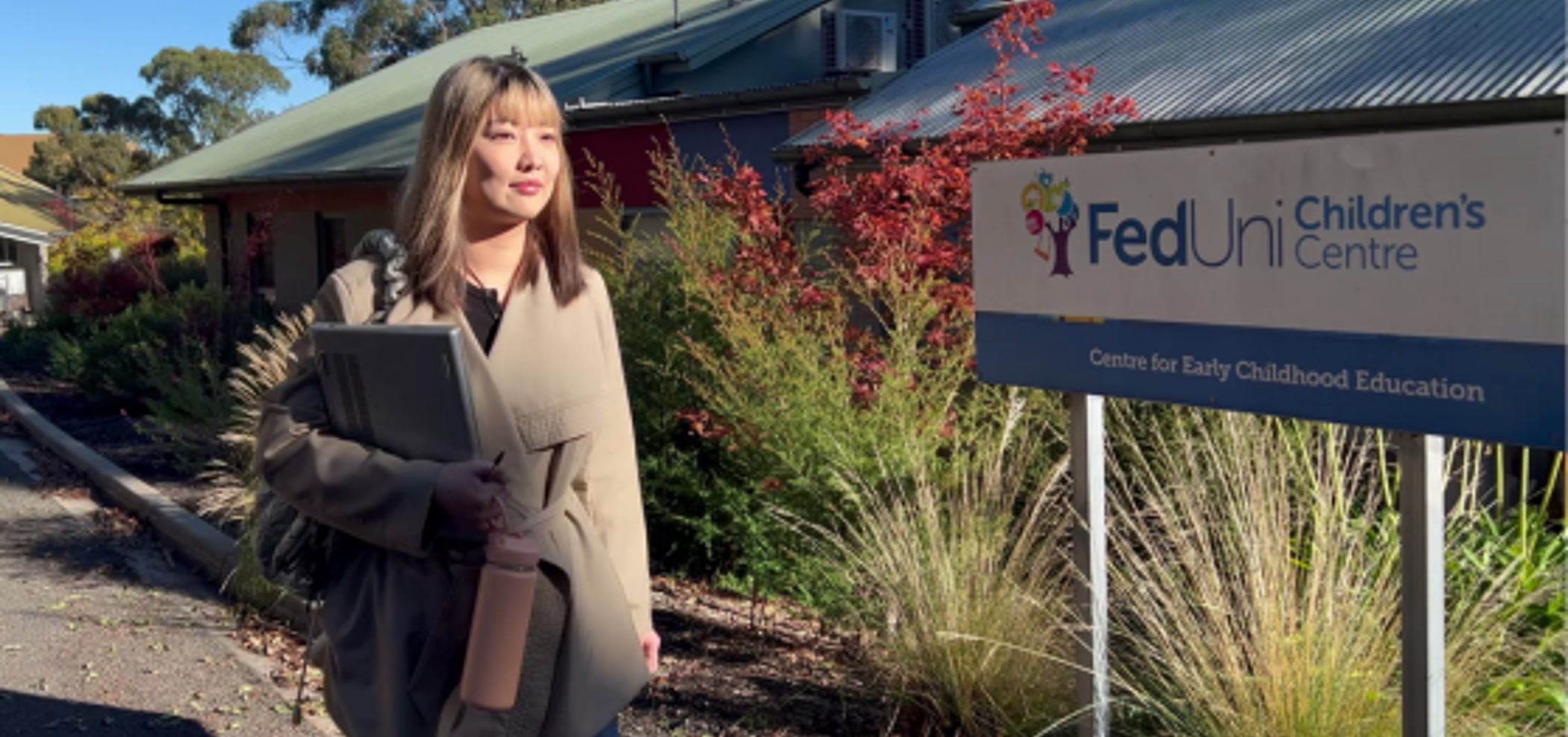
Like Kunyu, many Mt Helen students have the opportunity to complete a paid placement at the University's Children's Centre.
Every future teacher reaches a point where theory alone isn't enough.
Eventually, there comes a moment when teaching moves beyond lesson plans, classrooms replace lecture theatres and confidence grows through experience rather than textbooks.
Finding a university that helps you reach that point can be just as important as choosing the degree itself.
For international student Kunyu Huang, that was the question that shaped her decision to study in Australia.
She wasn't simply comparing universities or looking for a qualification. She wanted somewhere she could feel secure living away from home, gain meaningful experience with children and graduate feeling ready to begin her career as an early childhood teacher in Australia.
That search led her to Federation University's Master of Teaching (Early Childhood), where professional placements, approachable lecturers and a supportive campus community have gradually transformed uncertainty into confidence.
"I feel like Federation University is my first choice because I live in the student accommodation," Kunyu says.
Living at Fedliving on the Mt Helen campus meant lectures, the library and student support were only a short walk away. Instead of spending hours commuting, she could focus on settling into university life, building friendships and preparing for the profession she hopes to enter after graduation.
"I feel safe and the classrooms are more convenient."
For many international students, that sense of security is easy to overlook when comparing universities. Yet it often becomes the foundation that makes everything else possible.
Feeling comfortable in a new country creates space to focus on learning, to ask questions, to build relationships and to embrace opportunities that might otherwise feel intimidating.
For Kunyu, it was the beginning of developing the confidence she would need to become a teacher.
Learning what teaching really looks like
One of the biggest questions prospective teaching students ask is whether university will prepare them for the realities of working with children.
It's one thing to learn educational theory.
It's another to put it into practice.
That practical experience became one of the defining parts of Kunyu's studies.
The Master of Teaching (Early Childhood) includes extensive professional placements, allowing students to apply their learning in genuine early childhood education settings while being supported throughout the experience. Rather than waiting until graduation to discover what teaching feels like, students begin developing professional skills while they're still studying.
For Kunyu, placement was where everything started to make sense.
"I feel like I can learn more during my placement," she says. "I can learn how to build my confidence into the real learning and teaching environment."
Before placement, teaching was something she was preparing for.
Once she stepped into an early learning environment, it became something she could experience firsthand.
Each day introduced new opportunities to observe experienced educators, understand classroom routines and see how children respond to play-based learning. Concepts that had once existed in lecture notes suddenly had real meaning.
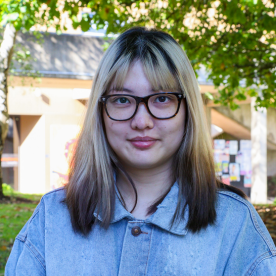
Rather than wondering whether she'd be ready to teach after graduation, Kunyu has already begun developing the practical skills and professional confidence she'll rely on throughout her career.
Every placement has helped her imagine herself not as a student preparing to become a teacher, but as an educator gradually growing into the role she has always wanted.
Finding support that makes a difference
For many postgraduate students, succeeding at university isn't simply about understanding the course material.
It's about knowing there's someone to turn to when assignments become challenging, deadlines begin to pile up or studying in a second language feels overwhelming.
That support has shaped Kunyu's experience from the beginning.
Throughout her studies, she's drawn on academic learning support to strengthen her writing while also relying on lecturers and tutors who encourage questions and take the time to explain difficult concepts.
"Federation University has the academic course for us to fully support our academic writing," she says.
"We also have lots of tutorials and teachers who fully support our questions when we're doing assessments."
Rather than feeling like she needed to work everything out on her own, Kunyu found an environment where asking for help was encouraged.
That support has gradually built something that extends well beyond academic results.
"I feel like I've been fully supported."
It's a simple statement, but one that reflects an experience many future international students hope to find. Knowing help is available can make the transition to studying overseas feel far less daunting and allow students to focus on building the knowledge and skills they'll carry into their careers.
Discovering the benefits of regional Victoria
Before arriving in Ballarat, Kunyu wasn't sure what life in regional Australia would feel like.
Like many international students, she wondered whether a smaller city would provide enough opportunities to enjoy life outside university.
Instead, she found a community that offered something she hadn't expected: the space to settle into study without feeling isolated.
"I can spend a lot of time doing my study because the regional area feels safe and quiet," she says.
Living at Fedliving on the Mt Helen campus has made everyday life straightforward. Classes, study spaces and university facilities are all within walking distance, making it easier to maintain a routine and spend more time focusing on assignments rather than travelling across the city.
The quieter pace has also made it easier to build friendships

From shared meals to shooting stars and spotting kangaroos on campus, these are some of Kunyu's favourite moments with friends.
"Actually, the regional area is not boring. We have a lot of fun. I have lovely classmates and lovely roommates. We can do lots of activities together."
Those relationships have become one of the highlights of her university experience.
Whether studying together, sharing meals or simply spending time with classmates after lectures, they've helped transform an unfamiliar place into somewhere that feels like home.
Safety has also played an important role.
Because she lives on campus, Kunyu says she appreciates having 24-hour security and the reassurance that comes with living in a close university community.
"Yeah, I feel fully supported when I live in Federation University, because I live in the student accommodation, we have the 24-hour security and I feel really safe when I live in there."
For prospective students considering regional Victoria, her experience challenges some common assumptions.
Choosing a regional university hasn't meant giving up opportunities or social connections.
Instead, it's given her an environment where she can concentrate on becoming the teacher she hopes to be while building lasting friendships along the way.
How placements helped build confidence as a future teacher
Studying overseas is a significant investment, and for many international students, financial support can shape where they choose to study.
For Kunyu, scholarships have eased some of that pressure, allowing her to focus more fully on preparing for her future career rather than constantly worrying about the cost of university.
"Federation University fully support us because my course is Master of Teaching and they have a lot of scholarships such as student accommodation scholarship... the Early Bird scholarship... and the placement scholarship."
Combined with the confidence she's gained through professional placements, those opportunities have helped her stay focused on the reason she came to Australia in the first place.
Her goal has remained remarkably consistent.
She wants to become an early childhood teacher in Australia.
Looking back, she believes every placement, every assessment and every conversation with her lecturers has helped bring that goal closer.
"So during my placement I can build my confidence and learn the daily routine of early childhood teaching. It's a really good chance to prepare for my future career."
One day, Kunyu hopes to welcome children into a classroom of her own.
When she reflects on her time at Federation University, she doesn't measure it by semesters or assignments. She remembers the confidence she developed through placement, the encouragement she received from her teachers and the friendships that helped Australia begin to feel like home.
For prospective students considering the Master of Teaching (Early Childhood), her experience offers something reassuring.
The path to becoming a teacher doesn't begin on graduation day.
It begins with finding a place where you feel supported enough to grow into the educator you want to become.
Ready to build your future as an early childhood teacher?
Kunyu chose Federation University's Master of Teaching (Early Childhood) because she wanted practical experience, supportive lecturers and a place where she could feel at home while studying in Australia. Through professional placements, campus living and personalised academic support, she's developed the confidence and skills to take the next step towards her career. If you're looking for a teaching degree that combines real classroom experience with a supportive learning environment, explore the Master of Teaching (Early Childhood) and discover where it could take you.
Frequently Asked Questions
For many international students, choosing a university is about more than academic reputation. It's also about feeling supported while adjusting to life in Australia. Kunyu found that studying the Master of Teaching (Early Childhood) gave her access to professional placements, academic learning support, approachable lecturers and on-campus accommodation, making it easier to settle into university life while preparing for her future career.
Yes. Professional placement is a core part of the Master of Teaching (Early Childhood). Students gain practical experience in real early childhood education settings, allowing them to apply what they've learned in class while developing professional skills. Kunyu says placement helped her understand classroom routines, communicate with children and build confidence before graduating.
Graduates commonly pursue careers as early childhood teachers in kindergartens, preschools and other early learning settings, depending on registration requirements and employment opportunities. For Kunyu, the goal has always been clear. She hopes to become an early childhood teacher in Australia, and believes her placements have helped prepare her for that next step by giving her practical experience in authentic learning environments.
Many students discover that regional Victoria offers a different pace of life to Australia's larger cities. Kunyu says living in Ballarat has given her a quieter environment where she can focus on study while still enjoying an active social life with classmates and roommates. She also values the sense of safety and convenience that comes from living on campus close to classes and university facilities.
Studying postgraduate education can be demanding, particularly for students adapting to a new country or learning environment. Kunyu accessed academic learning support to strengthen her academic writing and says tutorials and lecturers were always willing to answer questions throughout the semester. Having multiple sources of support helped her feel more confident as she progressed through the course.
For Kunyu, living at Fedliving has been one of the highlights of her university experience. Being able to walk to lectures, the library and support services has made daily life easier, while living alongside other students has helped her build friendships and feel connected to the university community. She also appreciates the 24-hour security available at the accommodation, saying it gives her peace of mind while living away from home.
Kunyu says scholarships have played an important role in helping her focus on her studies rather than worrying about finances. She highlights support including student accommodation scholarships and placement scholarships, explaining that financial assistance has helped reduce some of the pressures associated with studying overseas. Students should always check the latest scholarship eligibility and availability before applying.
Professional placements allow students to move beyond educational theory and experience the everyday reality of working with children. During her placements, Kunyu developed practical communication skills, observed experienced educators, learnt daily teaching routines and gained a deeper understanding of play-based learning. She believes these experiences have given her the confidence and practical knowledge she'll rely on when she begins her career as an early childhood teacher in Australia.