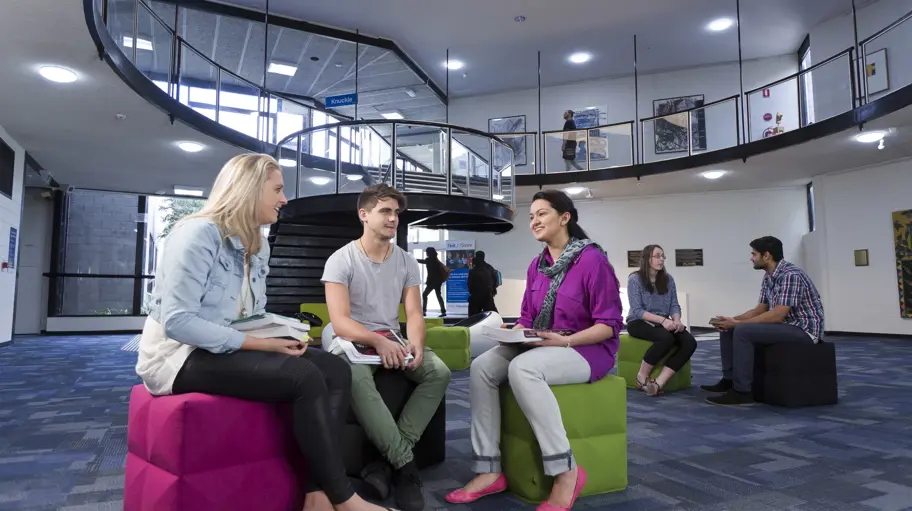
Our community aspirations
We are proud to be a regional university. And working with government, industry and local partners, we want to help ensure a bright future for our communities.
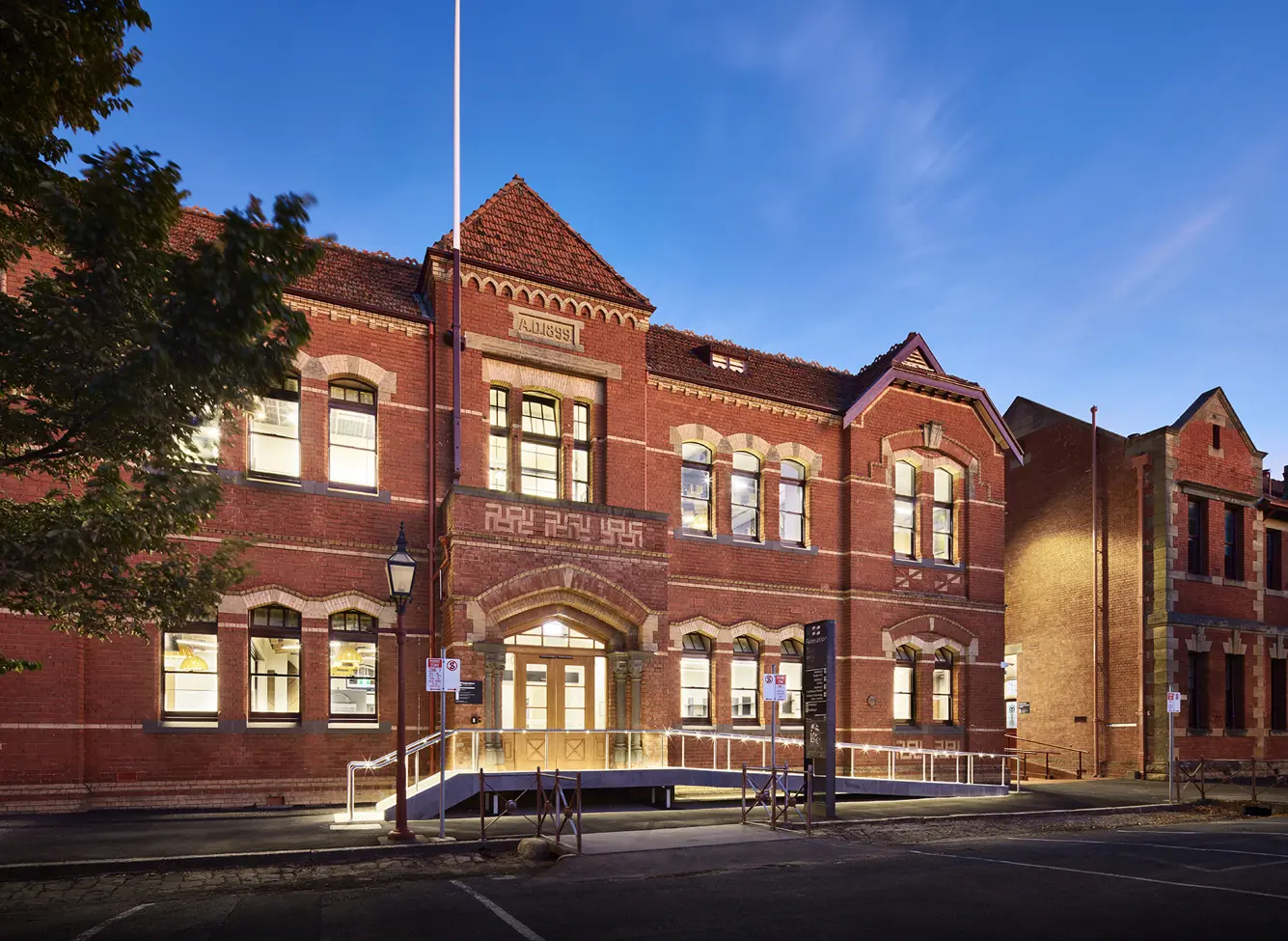
Transforming communities. Enhancing lives.
Federation University’s mission is clear: connect aspiration to achievement, and achievement to lasting community benefit.
As Australia’s only dual-sector, regionally headquartered university, we work alongside our communities to link study to skills, and skills to jobs. Over half our students come from equity backgrounds, and 70% of those who study locally stay locally – strengthening the workforce and driving regional growth.
We are proud to work with our community partners to secure local outcomes that advance the lives of those seeking an education and employers investing in our regions.
Aspirations for the Bush Summit 2025
At the Bush Summit, we are bringing forward a vision for Western Victoria’s future that is both practical and ambitious — ensuring our students, employers, and communities can seize the opportunities of the University Accord and the Victorian Skills Plan.
We strongly support a University Accord Reform plan that boosts post-secondary attainment levels to 80 per cent by 2050 across Australia — and are excited to deliver this with our partners across regional Victoria.
Our approach: connecting aspiring learners to jobs
Placements: paid, structured industry experiences, brokered and fully credited by the university through courses co-designed with employers, under Australia’s only higher education and vocational education and training program based on a Co-operative Education Model.
Places: job-creating precincts for innovation in some of Australia’s largest regional technology parks, like our Mt Helen Technology Park, which employs nearly 2,500 workers in the Western Victoria region.
Pathways: equity-focused programs that open doors for under-represented cohorts, from work in some of Australia’s most disadvantaged communities, to practical answers to basic cost-of-living concerns. These include our Nourishment Nooks at every campus, offering free essentials, and one of the largest equity scholarship programs in the country –— helping Federation rank No.1 in Australia for equity and First-in-Family participation.
Western Victoria Jobs and Skills Roadmap
We are excited to bring this roadmap to the Bush Summit.
We have shared it with leaders in the Commonwealth Government and Victorian Government - we want to know how we can deliver the skills needed to make Western Victoria and other regions in Australia thrive.
By 2035, the Victorian Skills Plan forecasts an additional 53,000 jobs in Western Victoria, with at least 26,000 more university or TAFE qualifications needed for locals to participate in this job boom.
Across the Central Highlands, Wimmera and Wimmera Southern Mallee, qualification levels remain below metropolitan averages.
This reduces the size of the local talent pool, especially in sectors already facing shortages - including health, education, STEM, advanced manufacturing and clean energy.
Without a coordinated plan, many students will need to leave the region to study, with fewer returning after graduation. Employers will increasingly need to source staff from metropolitan areas or overseas, often at higher cost and with longer recruitment times. This makes it harder to sustain a stable workforce, slowing local economic growth and undermining regional sustainability.
Under the University Accord reforms, our ambition is to deliver 42,000 additional local graduates by 2050 – 33,000 university and 9,000 TAFE – with a priority on reaching 2035 with as many pathways and opportunities in place as possible.
The roadmap is designed to achieve this. It brings Federation’s approach to the region up to the scale needed to reach the University Accord’s ambition.
It aligns growth in funded places directly with employer agreements and the skill priorities set out in the Victorian Skills Plan, so that local learners can train for local jobs and employers can meet their workforce needs without needing to look beyond the region.
Our goal is to ensure Western Victoria’s economic growth is matched by a skilled, homegrown workforce ready for the future.
Our plan is anchored by three key directions – placements, places and pathways.
Embed paid, structured industry placements in every TAFE and university program through our Co-operative Education Model - the first of its kind in Australia - ensuring students gain a minimum of 60 days’ assessed, workplace experience. In STEM fields, this means:
- Engineering students working with advanced manufacturing firms and renewable energy projects at Mt Helen Technology Park.
- IT and data science students embedded with regional tech companies and local government smart-city projects.
- Science and environmental students supporting clean energy, agriculture technology, and resource management initiatives.
Align funded places to employer agreements and skills gaps in priority STEM sectors - from precision engineering and robotics to large-scale solar, wind, and hydrogen projects - ensuring the local workforce can meet demand for high-tech skills.
Guarantee no aspiring learner or employer is turned away by matching Commonwealth Supported Places to verified industry needs, so students can train locally for in-demand roles and employers can plan confidently for growth.
Two anchor projects will be the foundation for delivering the Western Victoria Jobs and Skills Roadmap and advancing the University Accord’s aims of aligning education growth to local skills needs:
- $48 million Ballarat Co-operative Education and Skills City Centre — Revitalising Ballarat’s CBD into an integrated higher education and skills precinct. This investment will:
- Increase non-lab teaching capacity to meet demand from new domestic and international students.
- Co-locate student services, industry collaboration spaces, and innovation hubs.
- Create a vibrant student and business presence in the heart of the city, generating flow-on benefits for local retail, hospitality, and accommodation sectors.
- Expand the Mt Helen Technology Park’s industry partnerships by attracting new businesses into the CBD and linking them to the region’s research, training, and talent pipeline.
- $19 million Horsham Skills Precinct — Expanding Federation TAFE’s capacity to meet workforce needs in Western Victoria’s growing industries. This investment will:
- Deliver new training facilities for construction, agriculture, mining, and health.
- Include purpose-built clinical training spaces to support health workforce growth across rural and remote areas.
- Provide modern, industry-standard equipment to ensure training meets employer expectations and safety standards.
- Position Horsham as a regional skills hub, reducing the need for local students to relocate for specialist training.
Both projects will create long-term education, employment, and industry benefits while ensuring regional communities have the infrastructure to deliver on the University Accord’s vision for skills-aligned growth.
We know that building Western Victoria’s future workforce starts with ensuring everyone - regardless of income, background, or location - can access the qualifications our region needs.
Our roadmap proposes targeted measures to accelerate equity participation and support the University Accord’s goals:
- $19 million over four years for equity scholarships and bursaries - partial and full tuition support for students from low-income, rural, First Nations, and other under-represented cohorts, with a focus on priority areas such as STEM, education, health, and engineering. This investment would also include rural bursaries to reduce relocation, travel, and accommodation costs for regional and remote students undertaking study or placements.
- Placement subsidies - incentives for employers to partner with education providers to offer more paid or supported placements, connecting students directly to jobs and removing the financial barriers of unpaid or low-paid placements. These subsidies make education more appealing and accessible to low-income and equity students while strengthening the local workforce pipeline.
- Fed e-Bit teacher pipeline — expansion of our innovative program to support an additional 200 school community members each year to become qualified teachers, addressing critical shortages in rural and regional schools.
These measures will help more students start and complete their studies while strengthening the regional talent pipeline and reducing workforce gaps.
Our First Priority
To get started, we are seeking:
- Funding alignment to skills demand and employer agreements — ensuring all Commonwealth Supported Places are connected to verified workforce needs and growth matches both student aspiration and local industry capacity.
- CSP funding certainty — to avoid inadvertent impacts to local students planning to study in 2026 and beyond as structural adjustments are made to boost regional and outer suburban post-secondary attainment.
- Consultation from public and private partners to invest in infrastructure — $48 million for Ballarat and $19 million for Horsham to deliver the proposed precinct transformations.
- Public and private investment to expand equity and access — ongoing placement subsidies, rural bursaries, and support programs to ensure equity cohorts can participate fully in high-demand, high-impact courses.
Building on our policy thinking
The Western Victoria Jobs and Skills Roadmap builds on our Election and Policy Priorities 2025-2028 released in May. We will revise these priorities for 2026 with the roadmap at its core, and more for our other regions.
We welcome feedback and consultation from conference participants on how we can deliver this roadmap, or other approaches, to build the education-to-skills pathway our regions need.