
Dirt, boots, learning by doing: How vocational training built the foundation for a PhD
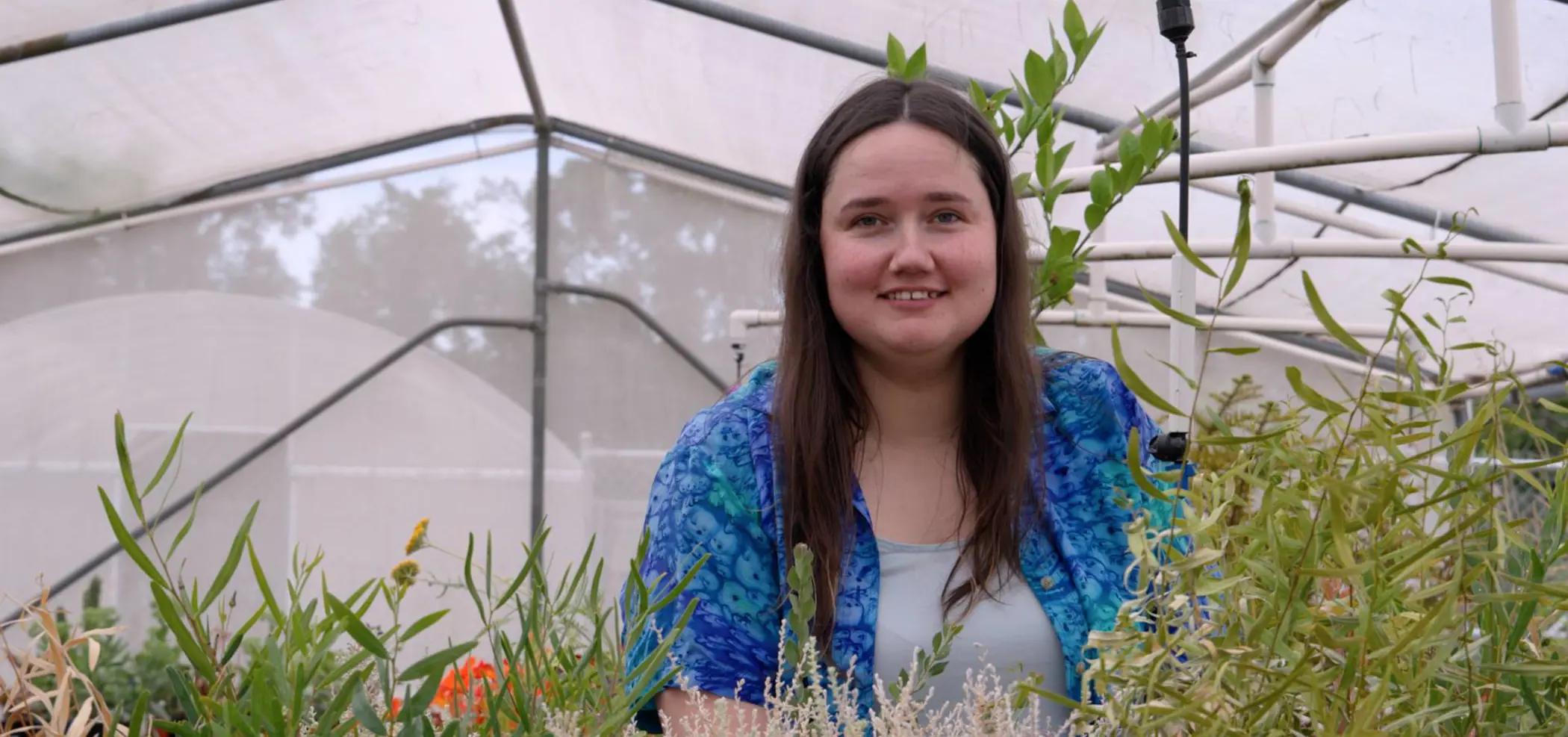
Janneke hopes to bridge the gap between academic research and practical conservation, providing practitioners with evidence-based strategies to restore resilience to vital ecosystems. Image: Supplied
As the top-ranked university in Australia for students transitioning from vocational to higher education, Federation University is home to many stories of opportunity and achievement.
One of them belongs to Janneke Zoontjens – a student whose unique path shows you don't need to follow a straight line to reach your academic goals.
After leaving high school at the end of Year 10, Janneke tried a series of jobs that, she says, felt unfulfilling and offered little prospect of a career she could truly enjoy.
Today, she’s charting a very different future working on a PhD in Environmental Science at Federation.
Her journey started with a simple internet search and a single image of a girl planting a tree.
"I liked the idea of working outdoors and I’ve always cared about the environment and native animals. It felt perfect," she said.
"I saw the image and I thought, ‘I can do that’. The journey began.”
Janneke enrolled in a Certificate III in Conservation and Land Management at Federation TAFE. Unlike traditional academic routes, the TAFE experience was defined by dirt, boots and "learning by doing”.
While many university students spend their first years in lectures, Janneke was in the field daily. She gained specialised certifications — including chainsaw operation and a chemical handler's permit — and learned to navigate remote, rugged terrain.
"TAFE was definitely valuable in comparison to just starting a bachelor’s degree," she says. "I got all of these practical skills that I otherwise may not have."
The turning point in her career came during a field trip to Federation’s vast Nanya Station, the remote conservation property and living lab in far western New South Wales. Encountering native animals in the harsh habitat sparked a lifelong passion.
"That's when I thought, ‘this is what I want to do,’" she says. Fittingly, the place she first visited as a TAFE student is now the primary site for her PhD research.
Her current research includes a focus on the Malleefowl and its role as an ecosystem engineer, exploring how the birds’ activities influence soil health and nutrient cycling in arid and semi-arid landscapes.
Her transition between vocational training and higher education was made easier by the pathway system at Federation University. After completing her Certificate III, Janneke moved into a diploma, which shaved a year off her bachelor’s degree. And because the TAFE and university are integrated, the transition was seamless.
"You're still in the system — you’ve even got the same student number. Everyone already knows who you are," she said.
"This highlights how important pathways programs are. They allow people like me, whose life didn't always run perfectly smoothly, to access education they might otherwise have been excluded from."
This continuity allowed her to build lasting relationships with mentors and experts in botany, arid-zone work and fauna conservation.
The opportunity to pursue a PhD came about because of the success of another Federation researcher. Ecologist Dr Heather Neilly, based at Federation’s Future Regions Research Centre, was awarded an Australian Research Council (ARC) Early Career Industry Fellowship to restore one million hectares of degraded eucalyptus mallee woodland in semi-arid and arid environments.
The fellowship included funding fora PhD student – opening the door for Janneke to take the next step in her academic journey.
Like her supervisor, Janneke hopes to bridge the gap between academic research and practical conservation, providing practitioners with evidence-based strategies to restore resilience to vital ecosystems, like that at Nanya.
By integrating soil health, plant biology and animal behaviour, their work aims to ensure the long-term survival of threatened species and the restoration of Australia’s unique arid landscapes.
Along the way, she has also impressed those in her field of work, winning the Outstanding Poster Presentation on Management or Restoration at the Australian Ecological Society’s Annual Conference.
Reflecting on her journey from a high school leaver to a researcher, Janneke says she has surprised herself.
"I never thought I would get this far," she says. "I think I’ve exceeded my own expectations."
Looking ahead, she aims to work for a non-profit or government agency, focusing on conservation and regeneration.
For students currently sitting in TAFE classrooms wondering if they can make the leap to higher education, Janneke has a simple message: "Just keep going. Just keep showing up. There’s no reason why you can’t achieve everything you want to achieve."