
Science students embark on Nepal trip of a lifetime
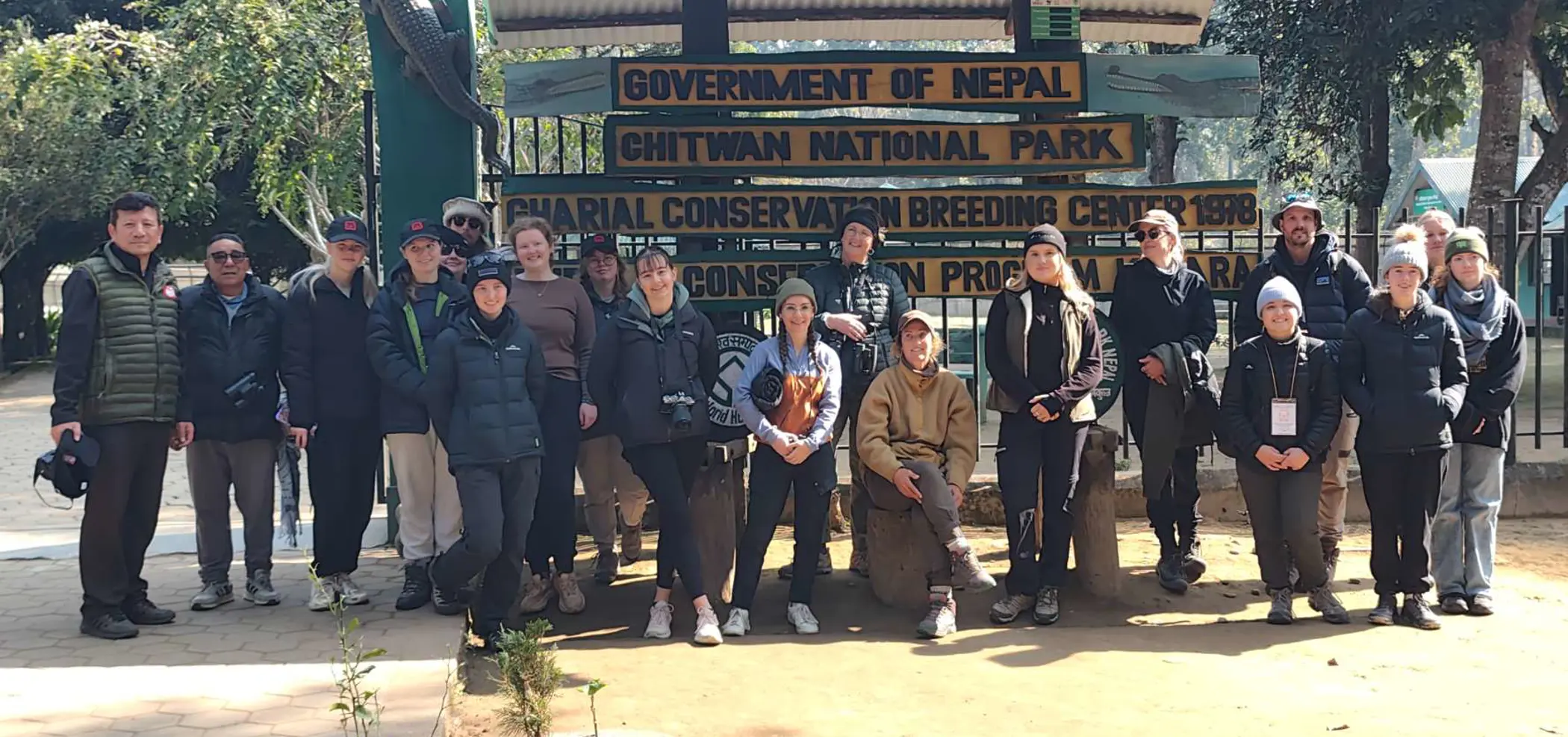
The three-week January study tour has been hosted by Nepal’s National Trust for Nature Conservation. Image: Supplied
An intensive pre-semester study tour of Nepal is giving Federation University Australia students valuable insights into community-led conservation techniques.
The three-week January study tour was hosted by Nepal’s National Trust for Nature Conservation (NTNC) and showcases alternative approaches to wildlife conservation for species like the Bengal Tiger and One-Horned Rhinoceros in Chitwan National Park.
Sixteen undergraduate science students developed hands-on skills in wildlife and habitat monitoring in Nepal’s lowland area, while learning about rural society, natural resource management and Nepalese culture through homestays.
Bachelor of Veterinary and Wildlife Science student Chloe Oldham, who is hoping to enter a career in wildlife conservation and ecosystem management, said the trip was an invaluable experience.
“I’m interested in the conservation of endangered species, so my favourite part was getting to interact directly with threatened species such as the greater one-horned rhinoceros,” Chloe said.
“At the biodiversity conservation centre, they have an orphaned juvenile rhino rescued from the jungle and during the day he comes over to hang out with us. We were staying on the edge of the jungle and every morning we were waking up to the sound of elephants; it was amazing.”
“I was amazed by how much the National Trust for Nature Conservation have been able to support communities in reducing the use of natural resources and develop alternative incomes. This has been a major factor in restoring the habitats of endangered species in Nepal.”
Six of the 16 students have stayed on in Nepal for a further three weeks to complete internships with the NTNC veterinary team, living and working with conservation and veterinary staff.
Federation University Professor of Conservation Biology Wendy Wright said it was exciting to enter the program’s sixth year, building lasting connections with Nepal’s conservation community.
“This immersive field experience is enabling students to broaden their global perspective and engage with new ways of thinking about wildlife conservation and animal health,” Professor Wright said.
“Students are introduced to Nepal’s community-based conservation model, where they can gain valuable insight into the forestry system.”